
Round vs. Oval vs. Cushion Cut Moissanite Guide
Most people spend hours comparing moissanite carat weights and metal types before realizing they have no idea how to evaluate moissanite stone cuts. The cut is not a cosmetic detail. It is the single biggest factor determining whether your stone looks alive or flat, whether it catches light across a dinner table or disappears into your hand. Round, oval, and cushion are the three cuts that dominate engagement ring searches at Livia Diamonds, and they behave completely differently from one another. This guide breaks down exactly what makes each shape perform the way it does, so you can choose with confidence rather than guesswork.
Table of Contents
- Quick Takeaways
- What Makes a Moissanite Cut Different from a Diamond Cut
- Round Cut Moissanite: The Benchmark for Brilliance
- Oval Cut Moissanite: Elongated Elegance with a Slimming Effect
- Cushion Cut Moissanite: Soft Glow and Vintage Romance
- Side-by-Side Cut Comparison
- How to Choose the Right Cut for Your Hand and Style
- Frequently Asked Questions
- References
Quick Takeaways
Key Insight |
Explanation |
|---|---|
Round cut delivers the most sparkle |
With 58 facets engineered for maximum light return, round cut moissanite outperforms every other shape for pure brilliance and fire. |
Oval cut appears larger than its carat weight suggests |
The elongated silhouette spreads surface area across the finger, making an oval look visibly bigger than a round stone of identical carat weight. |
Cushion cut produces the softest, most romantic glow |
Fewer, larger facets scatter light in a diffused pattern rather than sharp flashes, creating a warm vintage look that suits rose gold and yellow gold settings. |
Oval and cushion cuts are typically more affordable than round |
Less material is lost during cutting, which reduces the price per carat compared to a round brilliant of the same starting rough. |
Moissanite's refractive index exceeds that of a diamond |
This means any well-cut moissanite produces more colorful light flashes than a diamond of the same cut grade, a fact that matters most in round and oval shapes. |
Cushion cut is the most forgiving of slight color tints |
The diffused facet pattern in cushion cuts masks subtle warmth in near-colorless moissanite better than the sharp facets of a round brilliant. |
Finger shape and ring setting change how each cut reads |
An oval elongates shorter fingers; a round looks proportionate on most hands; a cushion suits wider bands and halo settings particularly well. |
What Makes a Moissanite Cut Different from a Diamond Cut
Moissanite is made of silicon carbide and has a higher refractive index than a diamond. In practical terms, that means light bends more sharply as it passes through the stone, producing more intense and more colorful flashes than you would see in a diamond of identical cut quality. The right cut amplifies this. The wrong cut wastes it entirely.
When jewelers talk about cut, they are referring to four elements: proportions, symmetry, polish, and facet alignment. A moissanite with excellent proportions and precise facet alignment will outperform a poorly cut stone of a higher color grade every single time. This is especially true for round brilliant moissanite, where the facet geometry has been refined specifically to maximize that high refractive index.
A common mistake shoppers make is treating cut and shape as interchangeable words. Shape is the outline of the stone as seen from above (round, oval, cushion). Cut quality is how well that shape is executed at the facet level. A round shape with poor symmetry will look dull. An oval with excellent proportions will look stunning. When you shop at Livia Diamonds, the handcrafted approach to each piece means cut quality is not an afterthought.
The cut of a moissanite stone directly affects its brilliance, fire, and overall beauty. A well-cut moissanite maximizes light reflection, producing exceptional brilliance and rainbow fire that no other affordable gemstone can replicate.
Pro tip: When viewing a moissanite in person or in a high-resolution photo, tilt the stone slightly rather than viewing it straight on. A well-cut stone will show consistent, evenly distributed flashes from every angle. Dark patches or uneven light return are signs of poor facet alignment, regardless of which shape you are considering.
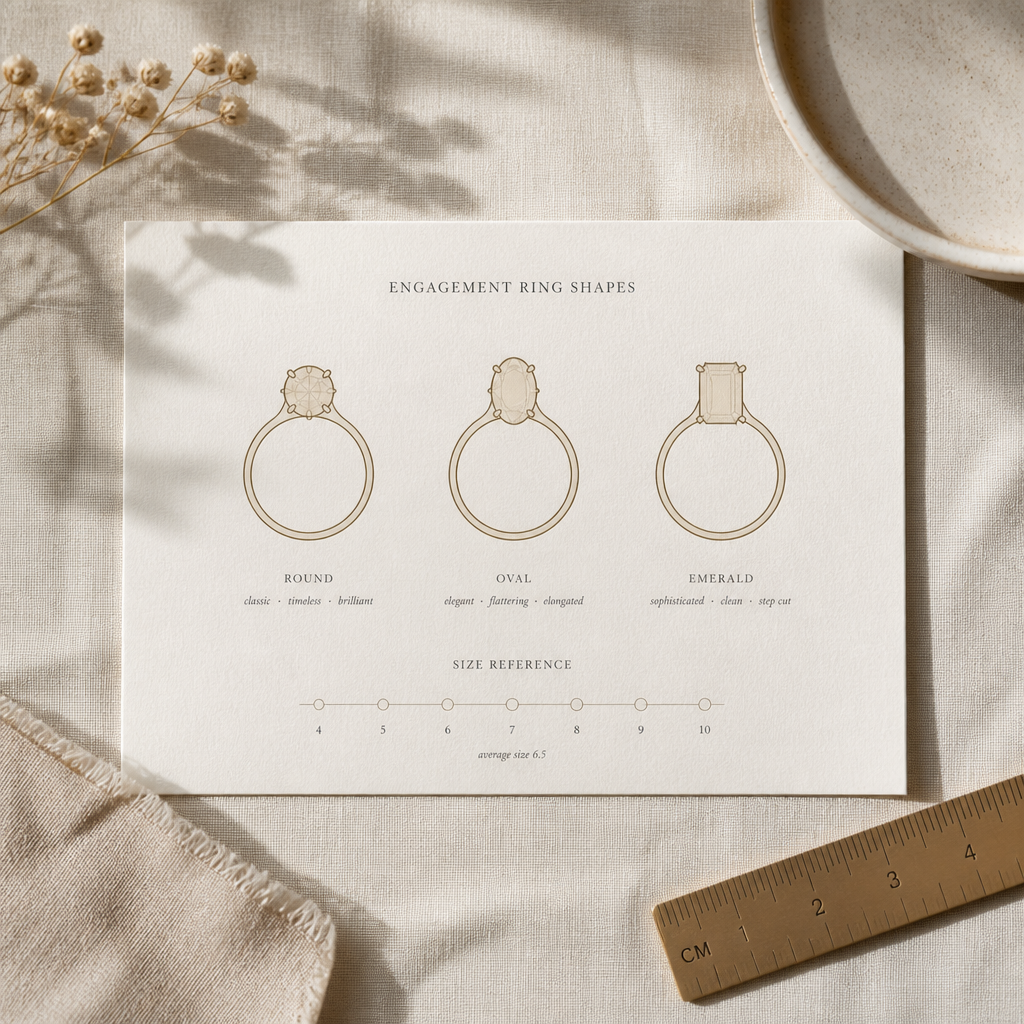
Round Cut Moissanite: The Benchmark for Brilliance
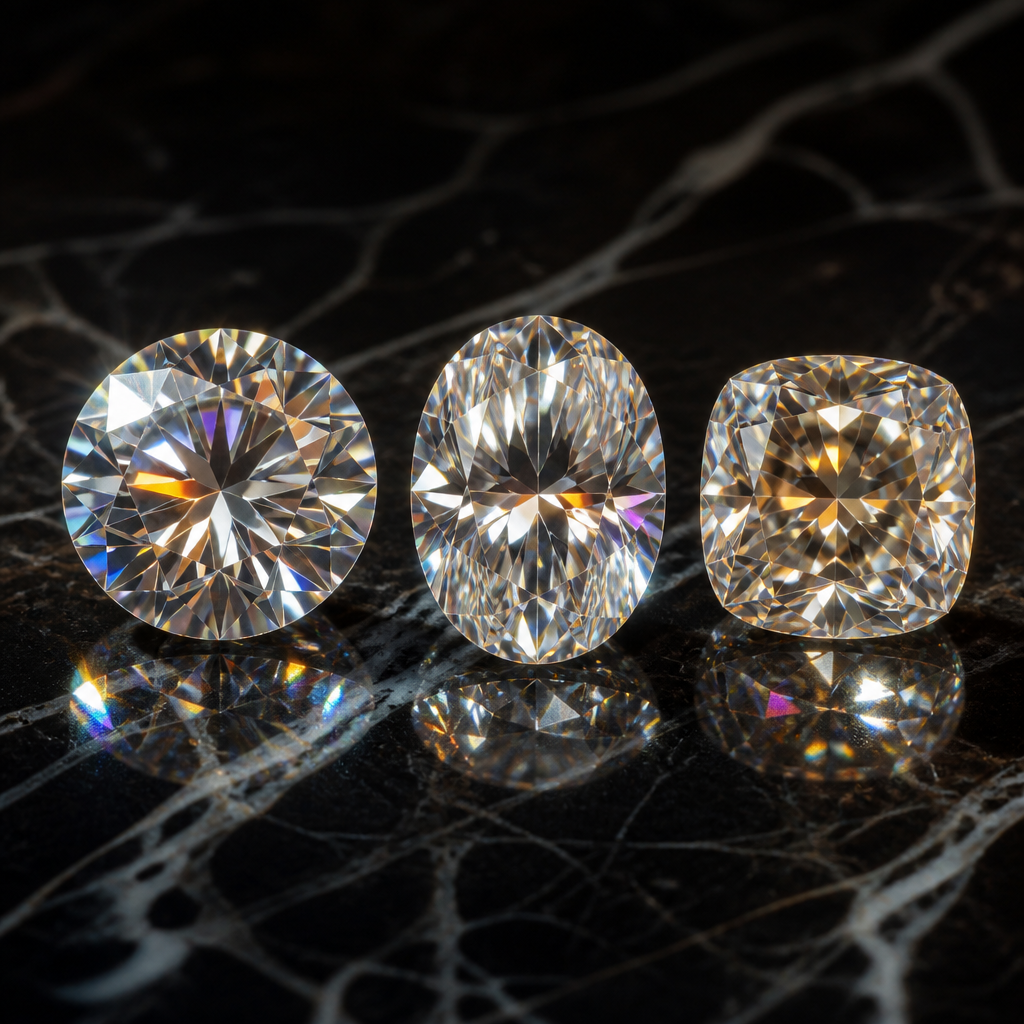
The round cut moissanite is the most popular choice, and that popularity is earned rather than fashionable. Its 58-facet design is specifically engineered to reflect the maximum amount of light back to the viewer's eye. Combined with moissanite's already exceptional refractive index, a round brilliant moissanite produces sparkle that is genuinely intense, producing colorful rainbow flashes that stand out in any lighting condition.
Why Round Brilliant Sets the Standard
The round brilliant facet pattern has been refined over decades to achieve near-perfect light performance. Every angle, every proportion is calculated to minimize light leakage from the bottom and sides of the stone. Because moissanite bends light more aggressively than a diamond, a round brilliant moissanite will produce more fire (those colorful flashes) than its diamond equivalent. Couples who want maximum visual impact and a stone that catches attention across a room consistently gravitate toward this cut.
The trade-off is price. Round moissanite commands a premium over other shapes because more raw material is lost during the cutting process. A round stone also carries a timeless appeal that works with virtually any setting style, from a classic four-prong solitaire to a vintage halo, but it is not a cut that will surprise anyone with its shape. If distinctiveness matters as much as sparkle, keep reading.
Best Settings for Round Cut Moissanite
Round moissanite suits almost any setting, but it performs best in settings that allow light to enter from multiple angles. A six-prong or four-prong solitaire, a cathedral setting, or a pavé band all let light flow freely around the stone. Bezel settings work beautifully too, though they reduce the light entering from the sides. At Livia Diamonds, round moissanite solitaires on thin bands are among the most requested combinations for engagement rings.
Pro tip: For round cut moissanite, prioritize cut quality over carat size. A well-cut 1.5ct round will consistently outshine a poorly cut 2ct round because light return, not diameter, is what makes a stone look alive on the hand.
Oval Cut Moissanite: Elongated Elegance with a Slimming Effect
Oval cut moissanite has surged in popularity, and for very practical reasons. The elongated shape distributes the stone's mass across a larger surface area on the finger, which means an oval moissanite will look noticeably larger than a round stone of the same carat weight. For shoppers working within a specific budget, this is a genuine advantage, not a trick.
Light Performance in an Oval Shape
Oval moissanite retains most of the brilliance of a round brilliant because its facet pattern is closely related. You still get strong light return and plenty of fire. However, ovals are more susceptible to a phenomenon called the "bow-tie effect," a dark shadow that forms across the center of the stone when light fails to reflect back from that zone. A well-cut oval minimizes this effect significantly. A poorly proportioned oval makes it visible and distracting. When shopping for oval moissanite, always ask to see the stone in natural light and in overhead light to check for bow-tie severity.
Because oval and cushion cuts lose less raw material during cutting than rounds, they are typically available at a lower price per carat. This makes oval an excellent choice for shoppers who want a visually impressive stone without stretching their budget to achieve it.
Who the Oval Cut Suits Best
The elongated silhouette of an oval moissanite makes shorter or wider fingers appear slimmer and longer. It also reads as elegant and slightly vintage without committing fully to the rounded edges of a cushion. Oval moissanite pairs beautifully with thin solitaire bands, east-west settings (where the stone is set horizontally), and halo settings that frame the elongated shape. For couples who want a stone that looks different from the classic round but still delivers serious sparkle, oval is the most compelling middle-ground option.
Cushion Cut Moissanite: Soft Glow and Vintage Romance
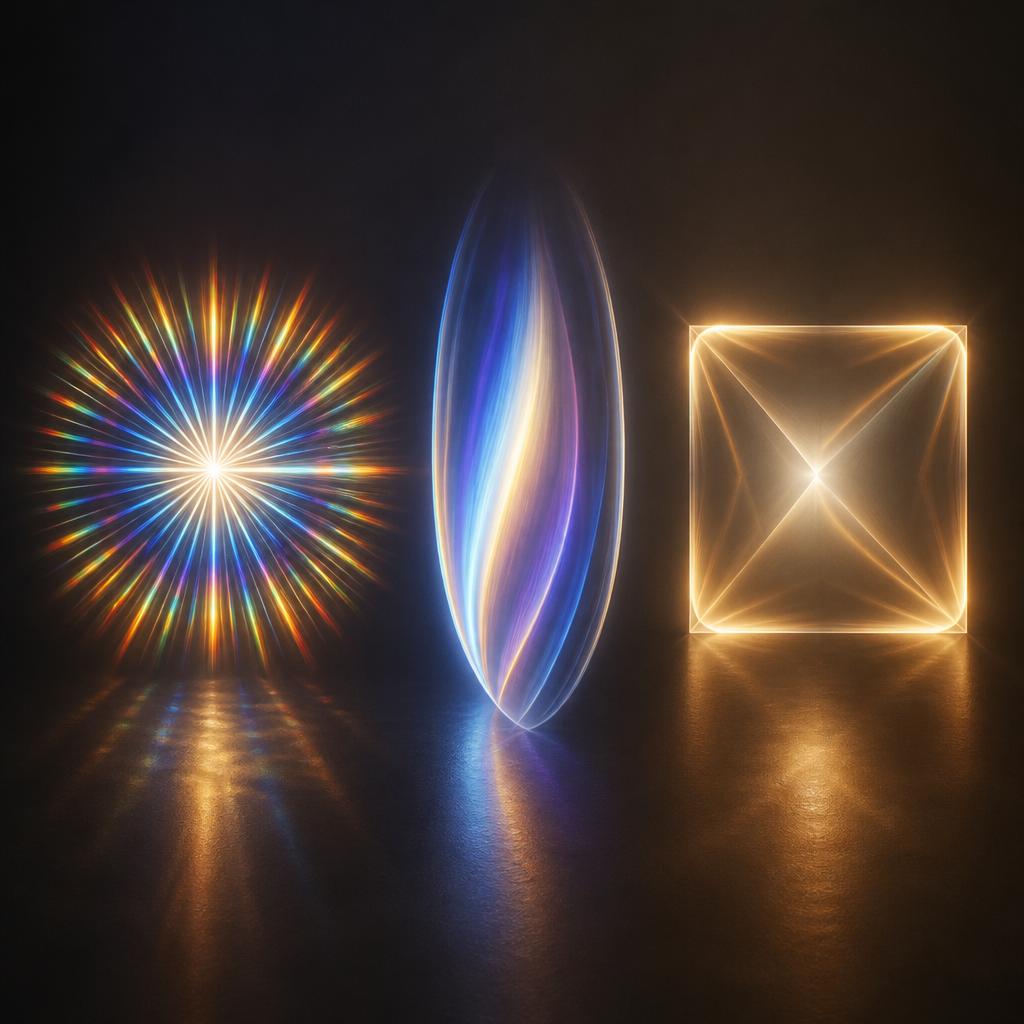
The cushion cut is defined by its square or slightly rectangular outline with softly rounded corners, and it behaves entirely differently from both round and oval in terms of light performance. Where round and oval produce sharp, bright flashes of light, cushion cut moissanite produces a softer, more diffused glow. The effect is often described as romantic or candlelit, and it suits people who prefer warmth over intensity.
Cushion Brilliant vs. Cushion Modified
There are two distinct facet arrangements in cushion cut moissanite. A cushion brilliant has larger facets that produce broader, chunkier flashes of light. A cushion modified (sometimes called a "crushed ice" cushion) has smaller, more numerous facets that create a sparkling, crushed-ice appearance somewhat similar to a round brilliant, but with the cushion silhouette. Neither is objectively better. Cushion brilliant is the more traditional look. Crushed ice is more modern and intense. Ask to see both before deciding, because in photographs they can look almost identical.
Color Masking and Metal Pairing for Cushion Moissanite
Cushion cut moissanite is particularly forgiving when it comes to slight color tints. The diffused facet pattern distributes any warmth evenly across the stone rather than concentrating it in sharp light-dark contrasts the way a round brilliant can. This makes cushion cuts a practical choice if you are considering a near-colorless rather than a colorless moissanite grade, and it is a meaningful budget consideration.
Cushion moissanite pairs exceptionally well with yellow gold and rose gold settings, where its soft glow complements the warmth of the metal. Vintage-style settings with milgrain detailing, halo frames, or intricate side stones are natural matches for the cushion shape. At Livia Diamonds, cushion cut moissanite in rose gold halo settings is one of the most requested custom design configurations, particularly for customers who have a clear vintage aesthetic in mind.
Side-by-Side Cut Comparison
Each of the three cuts serves a different buyer. The table below summarizes the most practically relevant differences to help you narrow down your choice before booking a consultation at Livia Diamonds.
Feature |
Round Cut Moissanite |
Oval Cut Moissanite |
Cushion Cut Moissanite |
|---|---|---|---|
Sparkle intensity |
Highest. Sharp, bright flashes in all lighting. |
High. Very close to round, with slightly more fire spread. |
Moderate. Soft, diffused glow rather than sharp flashes. |
Apparent size vs. carat weight |
Standard. Compact silhouette shows true carat size. |
Larger appearance. Elongated spread covers more finger area. |
Slightly larger than round. Spread depends on length-to-width ratio. |
Price relative to other cuts |
Highest. More raw material is lost during cutting. |
More affordable. Less rough material wasted. |
More affordable. Less rough material wasted. |
Bow-tie or shadow risk |
None. |
Moderate. Present in poorly proportioned stones; minimal in well-cut ones. |
Low. Diffused facets reduce visible dark zones. |
Best setting style |
Solitaire, halo, pavé band, cathedral. |
Solitaire, east-west, halo. |
Halo, vintage, milgrain, channel band. |
Best metal pairing |
White gold, platinum, yellow gold. |
White gold, platinum, rose gold. |
Yellow gold, rose gold, two-tone. |
Finger flattery |
Works on most finger shapes. Compact and balanced. |
Best for shorter or wider fingers. Creates a lengthening effect. |
Works well on wider fingers. Soft corners prevent a harsh angular look. |
How to Choose the Right Cut for Your Hand and Style
The most honest advice is this: do not choose a cut based on what is trending or what looks impressive in someone else's flat-lay photograph. Cuts look different on different hands, in different lighting, and in different settings. The decision should be grounded in your own hand shape, your daily lifestyle, and the aesthetic you actually want to wear every day, not just on a special occasion.
Finger Shape as a Starting Point
Shorter, wider fingers generally benefit from elongating shapes. Oval moissanite is the most effective option here, followed by cushion cut stones with a slightly longer length-to-width ratio (around 1.10 to 1.20 rather than a square 1.00 cushion). Round moissanite works on most finger types and never looks wrong, but it does not add the illusion of length the way oval does.
Longer, slender fingers can carry any cut beautifully, including a perfectly square cushion or a large round solitaire that would look oversized on a shorter hand. If you have longer fingers and want drama, a larger cushion or a bold oval east-west setting will read as striking rather than overwhelming.
Lifestyle and Wearability Considerations
Round and cushion moissanite have no sharp corners, which means they are less likely to snag fabric. Oval moissanite has pointed tips at each end of the long axis, which can occasionally catch on fine knitwear or gloves. This is a minor concern for most wearers, but it is worth knowing before you commit. All three cuts are durable enough for everyday wear when set properly, which is something Livia Diamonds' team addresses specifically during in-person and virtual consultations.
If you are genuinely uncertain between two cuts, Livia Diamonds' custom design service and consultation process allows you to compare stones in real time, whether you visit the Toronto office or connect virtually. This is far more useful than making the decision entirely from screen images, because moissanite's light performance is dynamic and genuinely needs to be seen in motion to be fully appreciated.
Pro tip: Ask your jeweler to show you stones in at least two different lighting conditions: bright overhead light (which favors round brilliants) and warm, dim ambient light (which favors cushion cuts). A stone you love only in one light condition will disappoint you in the other, and you will encounter both in real life.
Frequently Asked Questions
Which moissanite cut has the most sparkle?
The round brilliant cut produces the most sparkle. Its 58-facet design, combined with moissanite's high refractive index, generates more light return and more colorful fire than any other shape. Oval is a close second. Cushion cut prioritizes a softer, more diffused glow rather than peak intensity.
Is oval cut moissanite more affordable than round cut moissanite?
Generally, yes. Because less raw moissanite material is lost during the cutting process for oval shapes, oval moissanite is typically available at a lower price per carat than round brilliant moissanite of the same quality grade. This makes oval a strong value option for buyers who want a larger-looking stone within a set budget.
Does cushion cut moissanite show color more than round or oval?
Cushion cut moissanite actually masks slight color tints better than round cut due to its larger, more diffused facets. The diffused light pattern distributes warmth evenly rather than concentrating it in bright flashes, which means near-colorless cushion moissanite tends to face up whiter than a round brilliant of the same color grade.
What is the bow-tie effect and which cuts are most affected?
The bow-tie effect is a dark shadow that appears across the center of elongated stones when light fails to reflect back from that zone. Oval moissanite is the cut most susceptible to this effect. A well-proportioned oval minimizes the bow-tie significantly, but a poorly cut oval will show a visible, distracting dark band. Round and cushion cuts are not affected by this phenomenon.
Can I see round, oval, and cushion moissanite side by side before buying at Livia Diamonds?
Yes. Livia Diamonds offers both in-person consultations at their Toronto office and virtual consultations for customers who cannot visit in person. Their team can walk you through different stone shapes, settings, and sizes in real time, which is far more effective than choosing from photographs alone. Custom design services are also available if you want a specific combination of cut, setting, and band style not already in the collection.
Which cut is best for a vintage-style engagement ring?
Cushion cut moissanite is the most natural fit for vintage-style rings. Its soft rounded corners and diffused light performance align closely with the aesthetic of antique and estate jewelry. It pairs particularly well with halo settings, milgrain detailing, and yellow or rose gold bands. Oval moissanite also reads as vintage-inspired, especially in a thin solitaire or a bezel setting.
Does moissanite sparkle differently from a diamond in the same cut?
Yes, and the difference is most visible in round and oval cuts. Moissanite has a higher refractive index than a diamond, which produces more colorful, rainbow-like flashes rather than the white light return that diamonds are known for. Some buyers prefer this intensity. Others prefer the subtler sparkle of a diamond. In cushion cut, the difference is less pronounced because the diffused facet pattern moderates the intensity in both stones.
Have you compared round, oval, and cushion moissanite in person before making your decision? Share what surprised you most about how each cut looked on your hand.