
Are Lab-Created Diamonds Real? Everything to Know
If you've ever wondered whether lab-created diamonds are real, you're not alone. It's the single most common question couples ask before shopping for an engagement ring, and the short answer is: yes, absolutely. Lab-grown diamonds are genuine diamonds in every measurable sense. They share the same chemical composition, the same physical structure, and the same optical brilliance as mined diamonds. The confusion usually comes from marketing language, not science. This guide cuts through the noise with lab diamond facts that matter to real shoppers, whether you're browsing online from Toronto or walking into a jeweler for an in-person consultation.
Table of Contents
- Quick Takeaways
- What Makes a Lab Diamond Real?
- How Lab Diamonds Are Made
- Lab-Grown vs. Mined Diamond: Key Differences
- Can You Tell the Difference Visually?
- Value, Resale, and What Buyers Should Know
- Ethical and Environmental Considerations
- Why Moissanite Is a Different Conversation
- Frequently Asked Questions
- References
Quick Takeaways
Key Insight |
Explanation |
|---|---|
Lab diamonds are chemically identical to mined diamonds |
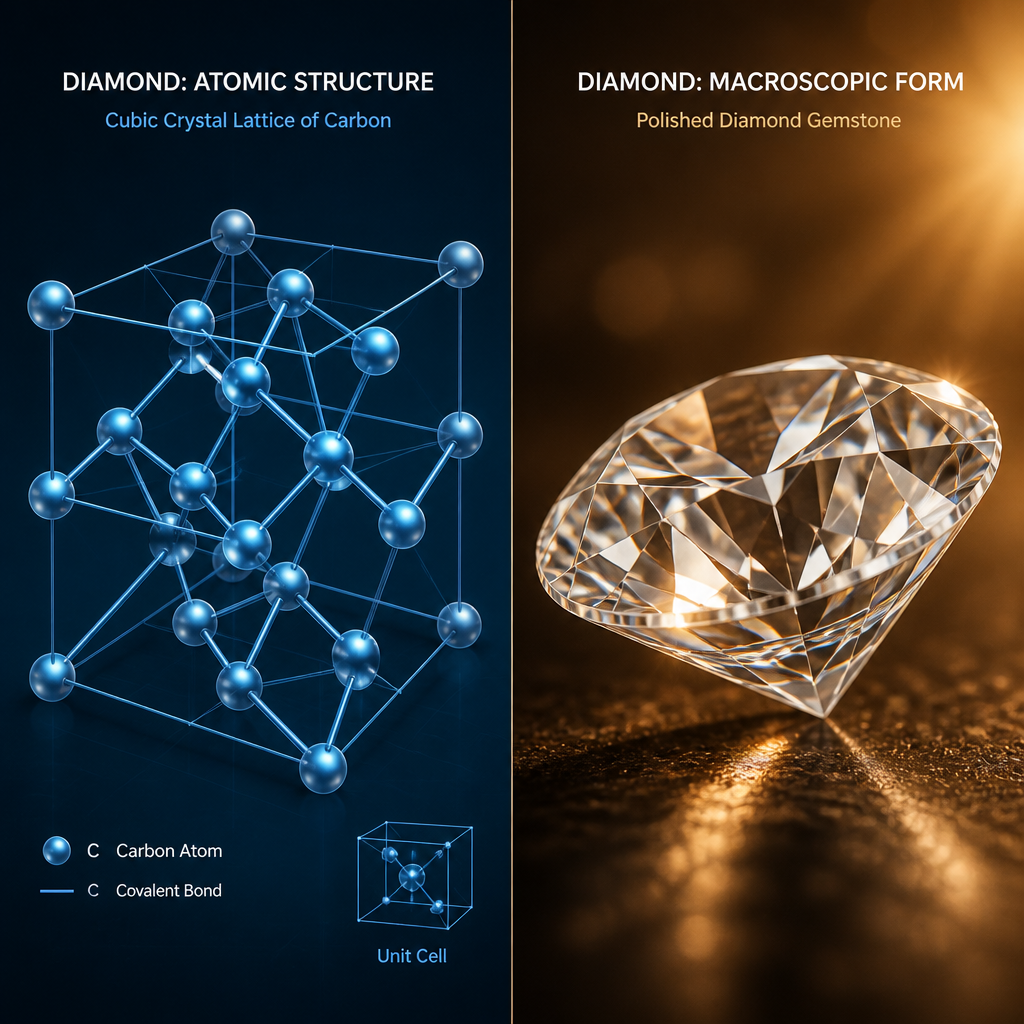
Both are pure carbon arranged in a cubic crystal structure. There is no material difference at the molecular level. |
Only a trained gemologist with specialized equipment can tell them apart |
UV light testing and professional magnification are required to identify origin. The naked eye cannot distinguish them. |
Lab diamonds cost significantly less than mined diamonds |
For the same cut, color, and clarity grade, a lab-grown stone typically carries a much lower price tag, giving buyers more stone for their budget. |
Resale value is lower for lab-grown stones |
Lab diamonds are not scarce. Their resale market is weaker than that of natural diamonds, which is a real factor if long-term investment matters to you. |
Lab diamonds are graded by the same bodies as mined diamonds |
Reputable labs such as the GIA and IGI certify lab-grown diamonds using the same 4Cs grading scale. |
Moissanite and lab diamonds are not the same stone |
Moissanite is a distinct gemstone (silicon carbide) with its own brilliance profile. It is not a lab diamond, though both are excellent alternatives to mined stones. |
Ethical sourcing is a genuine advantage, with caveats |
Lab diamonds avoid conflict-zone mining concerns, but the energy required for their production varies by manufacturer and energy source. |
What Makes a Lab Diamond Real?
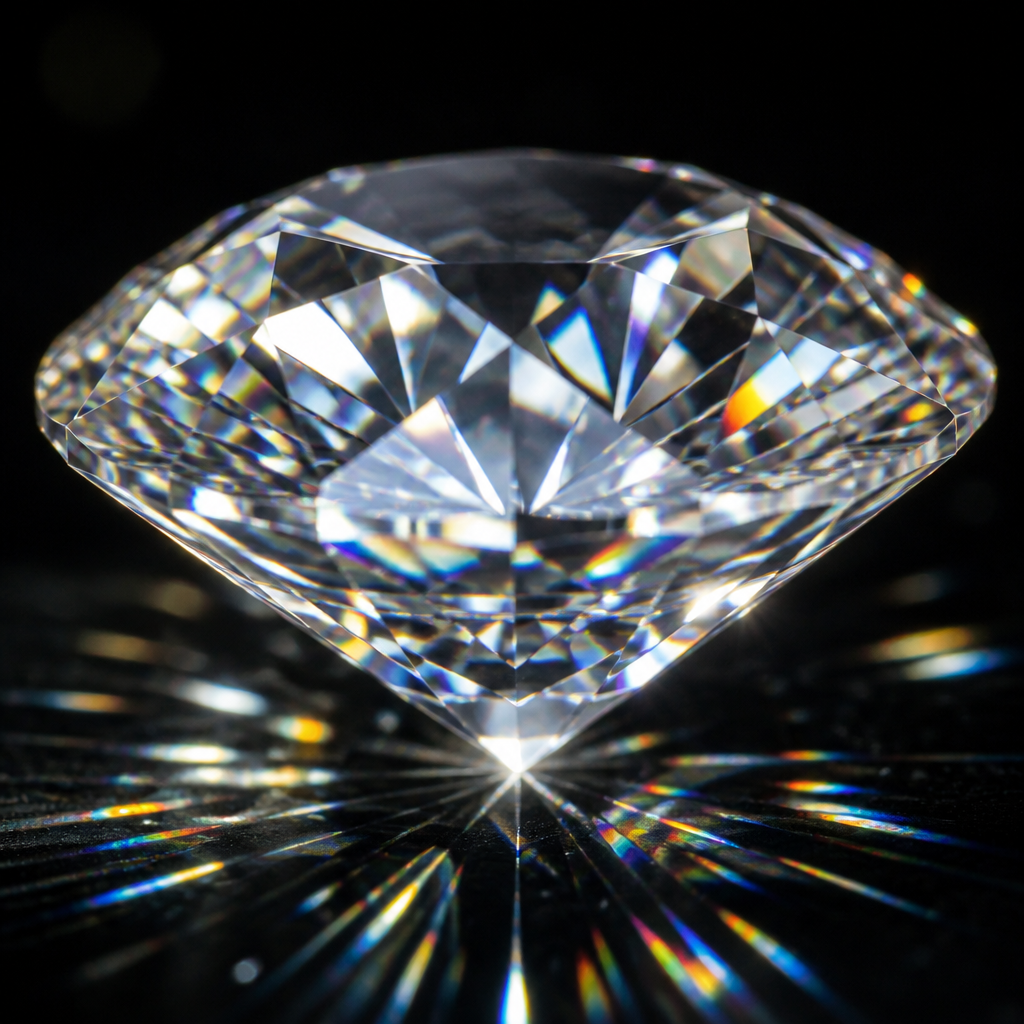
The word "real" when applied to diamonds means one thing scientifically: pure carbon atoms bonded in a diamond cubic crystal lattice. A lab-grown diamond satisfies that definition completely. It is not a simulant. It is not glass, cubic zirconia, or a coating over another material. It is diamond, full stop.
What differs is origin, not identity. A mined diamond formed under extreme heat and pressure deep in the earth over billions of years. A lab-grown diamond replicates those exact conditions in a controlled setting, producing the same result in weeks or months instead of geological timescales. The end product is physically, chemically, and optically identical to a mined stone.
Lab diamond facts like this matter because they inform every decision that follows, from the grade you choose to the price you pay. Shoppers who understand the science are far less likely to be talked into overpaying or, conversely, talked out of a stone that suits them perfectly.
How Lab Diamonds Are Made
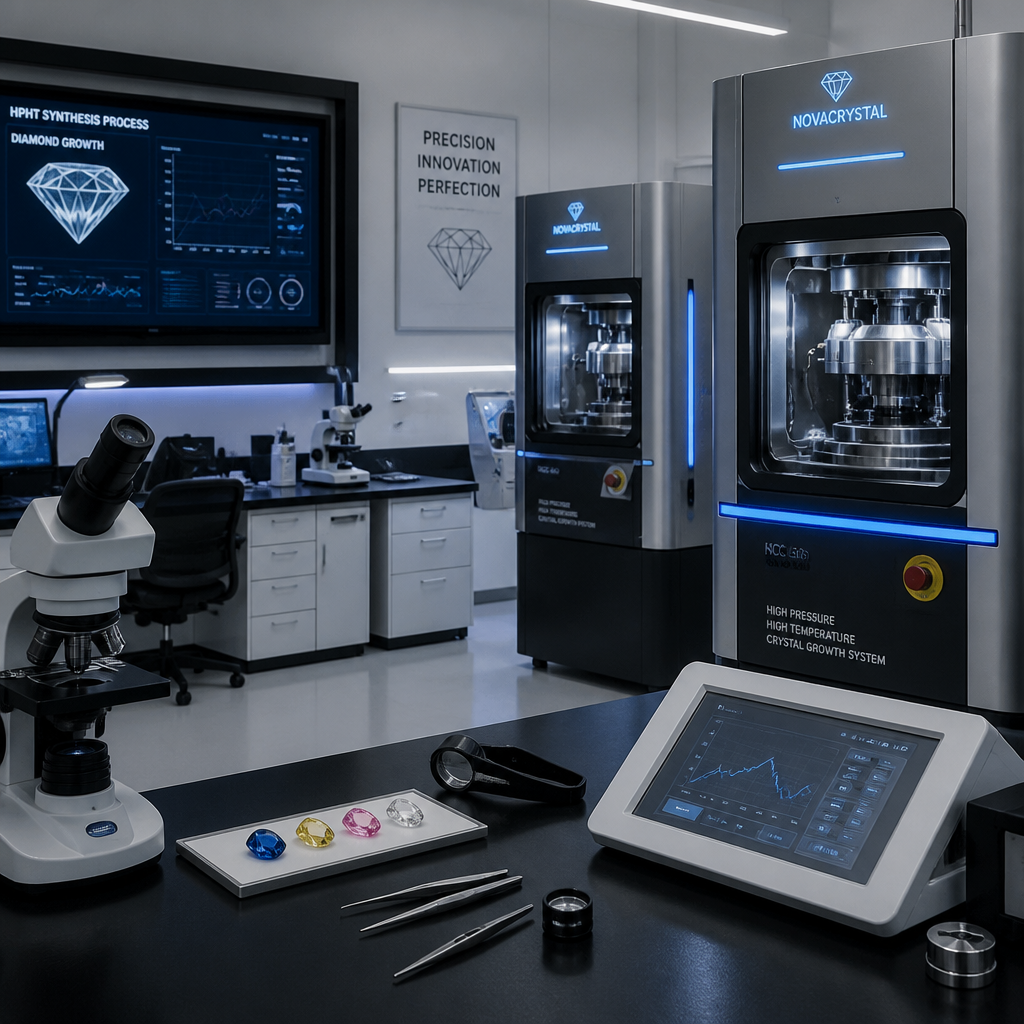
There are two main production methods, and knowing which one produced your stone can affect both quality and price. Neither method produces a "fake" diamond. Both produce real diamond material.
High Pressure High Temperature (HPHT)
HPHT replicates the geological conditions of natural diamond formation. A diamond seed is placed in carbon, then subjected to intense pressure and high temperatures. The carbon melts around the seed and crystallizes into diamond as it cools. HPHT diamonds sometimes carry a slight yellowish or bluish tint due to trace nitrogen or boron, which is identifiable under specialized equipment.
Chemical Vapor Deposition (CVD)
CVD grows diamond layer by layer from a carbon-rich gas inside a vacuum chamber. A thin diamond seed wafer is placed in the chamber, and carbon atoms deposit onto it, building up crystal layers. CVD tends to produce stones with fewer inclusions and is the more commonly used method for gem-quality lab diamonds sold in jewelry today.
In practice, most lab diamonds you encounter at a jeweler will be CVD-grown, particularly in the one-carat-and-up range popular for engagement rings. Neither process produces a diamond that is inferior in any visible way to a mined stone of the same grade.
Pro tip: When you buy a certified lab-grown diamond, ask to see the grading report and check which growth method is listed. This transparency is a sign the retailer knows their product and isn't obscuring any details.
Lab-Grown vs. Mined Diamond: Key Differences
The debate around lab-grown vs. mined diamond often gets muddled by sentimentality on one side and cost arguments on the other. Both are valid, but they are separate issues. Here is a direct comparison that covers what actually changes between the two.
Factor |
Lab-Grown Diamond |
Mined Diamond |
|---|---|---|
Chemical composition |
Pure carbon, cubic crystal structure |
Pure carbon, cubic crystal structure |
Hardness (Mohs scale) |
10 (hardest known natural material) |
10 (hardest known natural material) |
Price per carat |
Significantly lower for equivalent grade |
Higher, especially for larger stones and rare grades |
Resale value |
Lower; abundant supply keeps secondary market weak |
Stronger, particularly for high-quality stones |
Detectability |
Requires professional testing to identify origin |
Requires professional testing to confirm natural origin |
Certification |
Certified by GIA, IGI, and other grading labs |
Certified by GIA, AGS, and other grading labs |
Environmental footprint |
Varies by energy source used in production |
Significant land disruption and water use from mining |
The one area where mined diamonds hold a genuine advantage is rarity-driven value retention. Because lab diamonds can be produced in quantity, they are not scarce, and that affects their long-term resale price. If you are buying a diamond as a financial investment, that distinction matters. If you are buying it to wear and love for decades, it matters much less.
A larger lab-grown diamond at the same clarity and color grade as a smaller mined stone is not a compromise. It is a different trade-off. Know which trade-off fits your priorities before you commit to either.
Can You Tell the Difference Visually?
Place a lab-grown diamond and a mined diamond of the same cut, color, and clarity side by side, and the answer is no. You cannot tell them apart with your eyes. Even experienced jewelers cannot make the distinction without professional equipment.
The only reliable way to determine a diamond's origin is through specialized testing: UV light exposure, spectroscopy, or professional-grade magnification that can detect microscopic growth patterns unique to each production method. These tests are not something a guest at a dinner party is going to run on your ring.
This point matters practically for couples who worry about what people will think. The stone on your finger will look exactly as brilliant, exactly as white, and exactly as impressive as any mined diamond at the same grade. No one sitting across a table from you will know the difference unless you tell them.
Pro tip: If you are buying a lab diamond as an engagement ring, choose a stone with a GIA or IGI certificate and have the girdle laser-inscribed with the report number. This gives you permanent documentation of the stone's identity and grade, which matters for insurance purposes.
Value, Resale, and What Buyers Should Know
Let's be honest about resale. Lab-grown diamond prices have dropped considerably over recent years as production capacity has expanded. That is genuinely good news at the point of purchase, and genuinely complicated news if you plan to resell later. The secondary market for lab diamonds is weaker than for mined stones, and that gap has widened as supply has increased.
What this means in practice: buy a lab-grown diamond because you want to wear it, not because you expect to profit from it. If you approach it that way, the lower purchase price is an unambiguous win. A couple who spends less on the stone can put more toward the setting, the wedding itself, or any of the hundred other meaningful things in early married life.
Where Livia Diamonds Fits Into This
At Livia Diamonds, the philosophy has always been that a beautiful ring should not require decades of savings. As a Toronto-based, family-run jeweler with over 20 years of experience, they offer both lab-created diamonds and moissanite in handcrafted settings, with custom design services and flexible payment plans. That combination, quality craftsmanship plus realistic pricing, is what the lab-grown conversation should ultimately be about.
Competitors like Blue Nile and Vrai offer lab diamonds at scale, but they operate as large online platforms without the personalized, consultation-based approach that a family jeweler brings. If you want to talk through your options with someone who knows the product deeply, that difference in service model is real.
Ethical and Environmental Considerations
One of the frequently cited reasons to choose a lab-grown diamond is ethical sourcing. Conflict diamonds, sometimes called blood diamonds, have been a documented concern in the mined diamond industry. Lab-grown diamonds sidestep that concern entirely because there is no mining involved, and origin is always traceable.
The environmental picture is more nuanced. Diamond growth, particularly HPHT, is energy-intensive. Whether lab-grown production is environmentally superior to mining depends heavily on the energy source powering the facility. A manufacturer running on renewable energy has a genuinely lower carbon footprint than one using coal-heavy grid power.
A common mistake is assuming all lab-grown diamonds are automatically "green." The right question to ask is not just whether the diamond was grown in a lab, but what powered the lab. Retailers who are transparent about their supply chain will be able to answer that question. Those who cannot, or will not, are worth pressing.
Why Moissanite Is a Different Conversation
Moissanite deserves its own honest treatment because it is frequently lumped in with lab-grown diamonds, and that conflation does both stones a disservice. Moissanite is not a diamond. It is silicon carbide, a distinct mineral with its own optical and physical properties. It scores 9.25 on the Mohs hardness scale compared to diamond's 10, and it has a higher refractive index, which means it produces more fire and rainbow-colored brilliance than a diamond.
For some shoppers, that extra sparkle is exactly what they want. For others, the cooler, more subdued brilliance of a diamond, lab-grown or mined, is the preference. Neither is objectively better. They are different stones with different aesthetics and very different price points.
Livia Diamonds carries both, and that matters. A retailer who stocks only one option has an incentive to steer you toward it. A retailer who genuinely offers both can help you choose based on what suits your taste and budget, not what they have in inventory. You can explore both options through their engagement ring collection or book a virtual consultation to compare stones side by side on your own screen.
Pro tip: If you are torn between moissanite and a lab-grown diamond, ask to see both in the same setting style under the same lighting conditions. The difference in fire and color flash will immediately tell you which visual profile you prefer, and that preference is all that should drive the decision.
Frequently Asked Questions
Are lab-created diamonds considered real diamonds by gemologists?
Yes. Gemological institutions including the GIA classify lab-grown diamonds as real diamonds because they meet the same chemical, physical, and optical standards as mined diamonds. The only distinction they note is origin, not authenticity.
Will a jeweler know my ring has a lab-grown diamond without me telling them?
A trained gemologist using UV light, a loupe, or spectroscopy equipment may be able to detect growth patterns consistent with CVD or HPHT production. Visually, and without that equipment, no jeweler can reliably identify a lab-grown stone just by looking at it.
Do lab-grown diamonds hold their value over time?
Not as well as mined diamonds. Lab diamond prices have declined as production has scaled, and the secondary resale market reflects that. If resale value is important to you, factor this in honestly. If you are buying to wear and enjoy the stone, the lower entry price more than compensates.
Are lab-grown diamonds graded the same way as mined diamonds?
Yes. They are graded using the same 4Cs system: cut, color, clarity, and carat weight. Reputable grading labs such as the GIA and IGI issue certificates for lab-grown stones using the same standards applied to mined diamonds.
Is a lab-grown diamond the same as moissanite?
No. A lab-grown diamond is chemically pure carbon and is a genuine diamond. Moissanite is silicon carbide, a completely different mineral with different optical properties and hardness. Both are excellent alternatives to mined diamonds, but they are not the same material.
Can Livia Diamonds help me choose between a lab-grown diamond and moissanite?
Yes. Livia Diamonds offers both in-person consultations at their Toronto office and virtual consultations for remote shoppers. Their team has over 20 years of experience and can walk you through a side-by-side comparison of both stone types so you can make a decision based on what you actually see, not just what you read online.
Have you already made the switch to a lab-grown diamond or moissanite, or are you still weighing your options? Share your experience or your biggest question in the comments below.