
Radiant Cut vs Asscher Cut Engagement Ring Guide
Choosing between a radiant cut engagement ring and an Asscher cut engagement ring is one of the most underestimated decisions in the ring-buying process. Both shapes fall under the fancy diamond category, yet they attract completely different personalities and aesthetics. The radiant cut sparkles with a crushed-ice brilliance that rivals round diamonds, while the Asscher cut delivers a hall-of-mirrors depth that feels entirely intentional and architectural. If you have been staring at both side by side and still feel stuck, this guide will settle the debate with real detail, not vague style advice.
Table of Contents
- What Is a Radiant Cut Diamond
- What Is an Asscher Cut Diamond
- Quick Takeaways
- How They Perform on Light and Sparkle
- Shape, Face Size, and Finger Coverage
- Setting Styles That Work Best for Each Cut
- Radiant vs Asscher Full Comparison
- Choosing Moissanite or Lab Diamond in Either Cut
- Price and Value for Fancy Diamond Shapes
- Frequently Asked Questions
- References
What Is a Radiant Cut Diamond
The radiant cut was developed in 1977 by Henry Grossbard, who wanted to bring the fire and brilliance of a round brilliant cut into a rectangular or square outline. It features between 62 and 70 facets depending on the specific cutting style, and it is the only square or rectangular shape to combine a brilliant-cut crown and pavilion with trimmed corners.
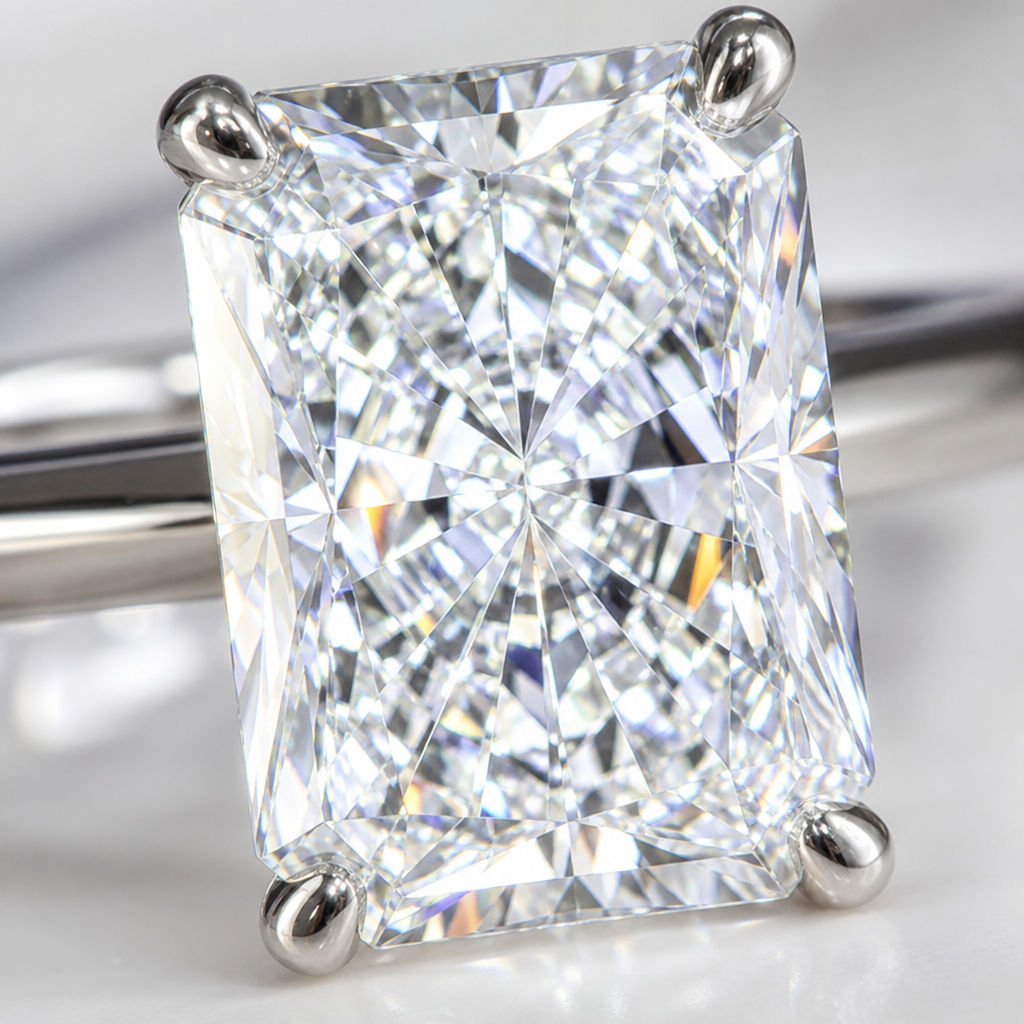
That trimmed-corner design is practical as well as aesthetic. It protects the stone from chipping at vulnerable points, making a radiant cut engagement ring a strong choice for people who work with their hands or live an active lifestyle. The facet structure creates what jewelers call a crushed-ice effect, where light breaks into hundreds of tiny, scattered flashes rather than larger, more defined patterns.
The radiant cut is available in ratios ranging from nearly square (1.00 to 1.05 length-to-width ratio) to distinctly elongated (1.20 to 1.50), giving buyers significant flexibility in how the stone looks on the finger.
What Is an Asscher Cut Diamond
The Asscher cut was created by the Royal Asscher Diamond Company in Amsterdam in 1902, making it one of the oldest fancy diamond shapes still in widespread use today. It is a square step-cut diamond with deeply cropped corners that give it a near-octagonal outline. The classic Asscher has 58 facets, while the Royal Asscher has 74 facets and a higher crown for improved light performance.
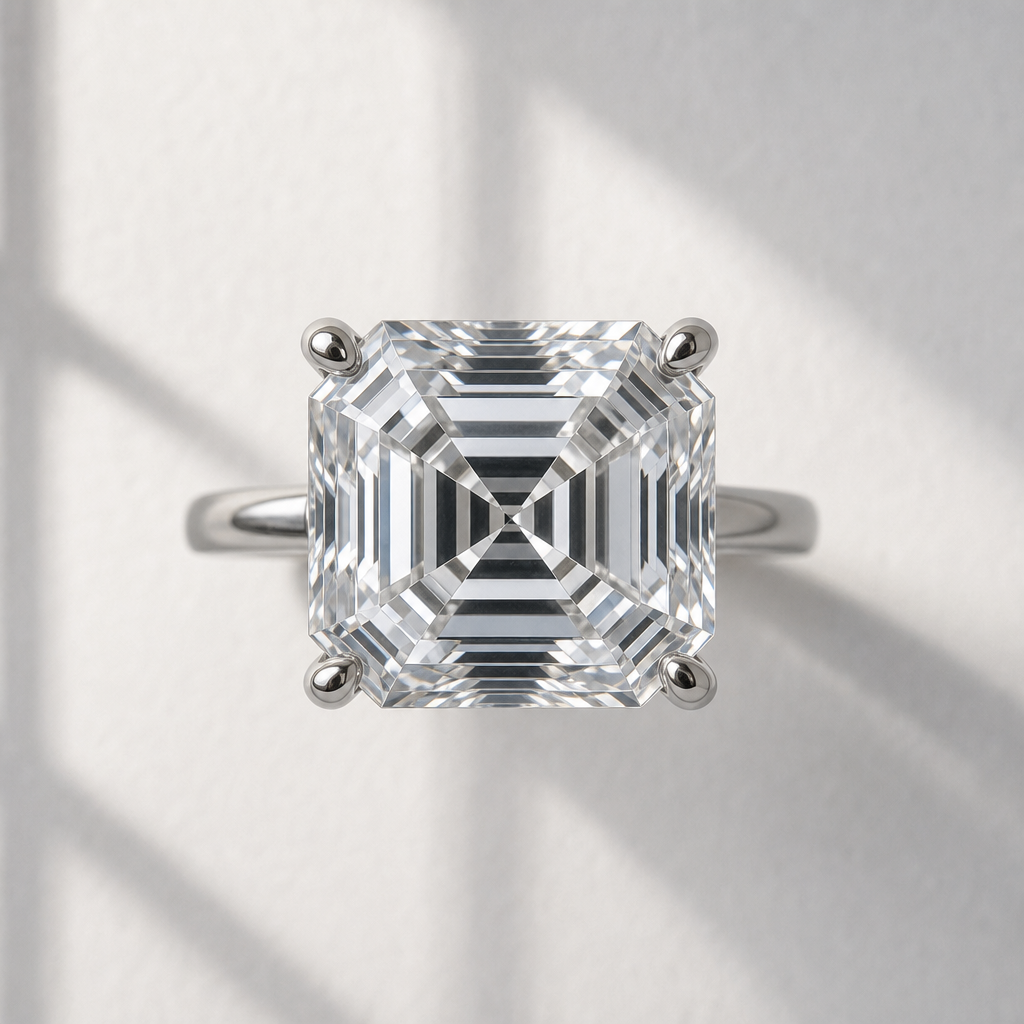
Unlike brilliant cuts, the Asscher uses large, parallel step facets that produce long flashes of light rather than scattered sparkle. This creates the famous hall-of-mirrors optical effect, where looking down into the stone reveals concentric squares radiating inward toward the culet. It is a deeply sophisticated effect, but it requires higher clarity grades to look its best because inclusions are far more visible in step cuts than in brilliant cuts.
The Asscher cut engagement ring has seen major revival periods, first in the Art Deco era and again in the early 2000s. Its structured, geometric appearance resonates strongly with people drawn to vintage and architectural aesthetics.
Quick Takeaways
Key Insight |
Explanation |
|---|---|
Radiant cuts hide inclusions better |
The crushed-ice facet pattern scatters light so aggressively that VS2 or even SI1 clarity stones often appear eye-clean, saving significant cost. |
Asscher cuts demand higher clarity |
Step facets in Asscher cuts act like windows into the stone. VS1 or better is the practical minimum to avoid visible inclusions in most lighting conditions. |
Radiant cuts appear larger for their carat weight |
A radiant cut's elongated outline covers more surface area than a round or Asscher of equal carat weight, making it look visually bigger on the finger. |
Asscher cuts read as distinctly vintage |
The octagonal outline and step facets immediately signal Art Deco and early 20th-century aesthetics, which is a strong selling point for vintage-loving buyers. |
Both cuts work beautifully in moissanite |
Moissanite's higher refractive index (2.65 vs. 2.42 for diamond) makes the radiant cut even more explosive in brilliance, and gives the Asscher's hall-of-mirrors a rainbow fire that diamonds cannot match. |
Radiant cuts are more versatile in settings |
The trimmed corners allow radiant cuts to work in solitaires, halos, three-stone, and east-west settings without looking awkward, while Asscher cuts are more specific in their best setting matches. |
Lab-grown diamonds make both cuts accessible |
Lab-created diamonds in radiant and Asscher cuts cost 50 to 80 percent less than mined equivalents of the same specifications, opening up fancy shapes to a much wider budget range. |
How They Perform on Light and Sparkle
Light performance is where the radiant and Asscher cuts diverge most dramatically. Understanding this difference before you commit to a shape will save you from buyer's remorse.
Radiant Cut Light Performance
The radiant cut's brilliant facet arrangement means it returns light to the eye in rapid, scattered bursts. In practice, this shape maintains its sparkle even in dim environments like restaurants or candlelit venues, where step-cut diamonds often look noticeably flat. The brilliant facet pattern compensates for minor color and clarity imperfections, which is one reason radiant cuts are often recommended for buyers working with a tighter budget without wanting to sacrifice visual impact.
A common mistake when buying a radiant cut is prioritizing carat weight over cut quality. A well-cut 1.50-carat radiant will outperform a poorly cut 2.00-carat radiant in almost every lighting condition. Pay attention to the depth percentage, ideally between 61 and 67 percent, and the table percentage, ideally between 61 and 69 percent.
Asscher Cut Light Performance
The Asscher cut plays an entirely different game. Its step facets produce fewer but larger flashes of white light. The hall-of-mirrors effect is visually striking in good lighting, but the stone can appear dark or glassy in low light. This is not a flaw, it is a design intention, and buyers who love Asscher cuts typically love exactly this quality of measured, controlled brilliance.
The Royal Asscher variant, with its 74 facets, improves on the classic design significantly. If you are considering an Asscher cut in moissanite, the higher refractive index adds color dispersion to the step facets that a mined diamond cannot replicate, creating a uniquely vivid version of the classic look.
Shape, Face Size, and Finger Coverage
Both shapes are square-dominant, which means they work differently on the hand than oval or elongated cuts. The key variable is how each one interacts with finger length and width.
Radiant Cut on the Hand
Because the radiant cut is available in square and rectangular ratios, buyers have real control over how much of the finger it covers. An elongated radiant (length-to-width ratio of 1.25 to 1.40) creates a slenderizing effect similar to an oval cut, making it flattering on wider or shorter fingers. A square radiant with a 1.00 to 1.05 ratio looks bold and symmetrical, well suited to longer fingers where the width does not appear to truncate the hand.
In practice, the elongated radiant is the more universally flattering choice. It reads as larger to the eye and works with a wider range of hand shapes than the square version.
Asscher Cut on the Hand
The Asscher cut is always approximately square. Its cropped corners give it an octagonal silhouette that sits in a compact footprint on the finger. On shorter fingers, this can emphasize the finger's width rather than lengthen it. On longer, slender fingers, the geometric shape looks intentional and striking.
If you have shorter fingers and love the Asscher aesthetic, consider pairing it with a tapered band or a setting with elongating design details. That combination creates visual length without changing the stone shape.
Pro tip: When comparing these two shapes in person or during a virtual consultation, view them from the side as well as from the top. The Asscher's higher crown and deeper step facets mean it sits taller on the finger than most radiant cuts, which affects how the ring looks in profile and how it fits under gloves or rings worn on adjacent fingers.
Setting Styles That Work Best for Each Cut
The setting is not a secondary decision. It either amplifies or undermines what makes each cut distinctive, and this is an area where working with a jeweler who understands both shapes pays off immediately.
Best Settings for a Radiant Cut Engagement Ring
The radiant cut is one of the most setting-versatile fancy shapes. Its trimmed corners mean it does not have the vulnerability of princess cut points, but it retains the same modern geometric energy. The top performing settings for radiant cuts include:
Four-prong solitaire: Keeps maximum stone visible and lets the brilliant facets do their work without distraction.
Halo setting: A cushion or square halo of smaller stones around a radiant center amplifies its already impressive face-up size.
Three-stone setting: Flanking radiant side stones or tapered baguettes both work exceptionally well given the rectangular outline.
East-west setting: An elongated radiant set horizontally across the finger is a modern, unconventional choice that reads distinctly contemporary.
Best Settings for an Asscher Cut Engagement Ring
The Asscher cut's vintage personality is best honored in settings that complement rather than compete with its geometry. Settings that work best include:
Art Deco-inspired settings: Milgrain detailing, geometric filigree, and engraved bands all reinforce the Asscher's early 20th-century DNA.
Four or eight-prong solitaire: Eight prongs that align with each of the octagonal corners frame the stone perfectly and protect the cropped corners.
Channel-set band: Baguette or square channel stones on the band mirror the step-facet geometry of the center Asscher stone.
Bezel setting: A full bezel around an Asscher creates a sleek, modern take on a vintage shape and protects all eight corners simultaneously.
"The setting does not just hold the stone, it completes the visual sentence the stone starts. A step-cut diamond in the wrong setting is like a well-written sentence with the wrong punctuation." - Jewelry design principle cited across graduate gemology education programs at institutions affiliated with the Gemological Institute of America.
Radiant vs Asscher Full Comparison
This side-by-side breakdown distills the practical differences between these two fancy diamond shapes into a format you can use directly when making your decision.
Feature |
Radiant Cut |
Asscher Cut |
|---|---|---|
Facet style |
Brilliant (crushed-ice sparkle) |
Step (hall-of-mirrors effect) |
Shape outline |
Square or rectangular with trimmed corners |
Square with deeply cropped corners (octagonal appearance) |
Minimum recommended clarity |
VS2 or SI1 often eye-clean |
VS1 or better recommended |
Light performance in dim settings |
High, maintains sparkle in low light |
Moderate, relies on good lighting conditions |
Best for finger shape |
Versatile, elongated ratio flatters shorter fingers |
Best on longer, slender fingers |
Aesthetic era |
Modern, contemporary, bold |
Vintage, Art Deco, architectural |
Setting versatility |
High, works in most setting styles |
Moderate, shines most in era-appropriate settings |
Typical price differential (lab diamond) |
Mid-range among fancy shapes |
Slightly lower demand, can mean better per-carat value |
Choosing Moissanite or Lab Diamond in Either Cut
The radiant vs asscher debate takes on a new dimension when you factor in stone material. Both cuts are available in moissanite and lab-created diamond, and the material choice meaningfully affects how each cut performs visually.
Moissanite in Radiant and Asscher Cuts
Moissanite has a refractive index of 2.65 to 2.69 compared to diamond's 2.42. In a radiant cut, this translates to more intense, more colorful sparkle. The crushed-ice pattern becomes even more vivid, and the stone can look almost electric in direct sunlight. Some buyers love this. Others find it more flash than they want. It is worth viewing a moissanite radiant in multiple lighting conditions before committing.
In an Asscher cut, moissanite's higher dispersion adds rainbow fire to the step facets that a mined diamond cannot produce. The hall-of-mirrors effect picks up flashes of color rather than purely white light. This creates a look that is distinctly different from a traditional Asscher diamond, which is a feature rather than a flaw for buyers who want something genuinely unique.
Lab-Created Diamond in Radiant and Asscher Cuts
Lab-created diamonds are chemically, physically, and optically identical to mined diamonds. They perform exactly the same way in both radiant and Asscher cuts, and they carry GIA or IGI grading reports that confirm their specifications. The price advantage is the deciding factor for most buyers: lab-created diamonds typically cost 50 to 80 percent less than mined equivalents of the same carat, cut, color, and clarity grade.
At Livia Diamonds, both moissanite and lab-created diamond radiant and Asscher cuts are available in custom settings, with in-person and virtual consultations available to help buyers compare stones side by side before committing. This is particularly valuable for Asscher cuts, where clarity differences between grades are plainly visible to the naked eye.
Pro tip: If you are considering a moissanite Asscher cut, request to see it under warm indoor lighting as well as daylight. The color dispersion in moissanite is most visible in direct sunlight and can look significantly different in the softer light of a restaurant or indoor setting. Knowing what to expect in both conditions will ensure you are genuinely happy with the stone year-round.
Price and Value for Fancy Diamond Shapes
Fancy diamond shapes, including both radiant and Asscher cuts, are generally priced below round brilliant diamonds of equivalent carat weight and quality. Round brilliants carry a premium because they are the most popular shape and the cutting process wastes more rough diamond material. Fancy shapes benefit from more efficient cutting yields, and that saving is often passed to the buyer.
Between radiant and Asscher cuts specifically, radiant cuts tend to command slightly higher prices because demand is higher. The Asscher's more niche appeal in the current market means buyers can often find better per-carat value in Asscher cuts compared to radiants at the same quality level. This dynamic shifts in vintage markets, where Asscher cuts can carry a premium for their rarity and historical character.
In the lab-grown diamond category, the gap between the two shapes narrows considerably. A 2.00-carat lab-created radiant cut engagement ring at VS1 clarity and G color, set in a 14-karat white gold solitaire, typically falls in a very accessible price range compared to an equivalent mined stone. The same specifications in an Asscher cut might come in slightly lower, reflecting the current market demand differential. Working directly with a specialist like Livia Diamonds, rather than a large impersonal marketplace, allows you to navigate these pricing variables with real guidance rather than algorithm-driven suggestions.
Frequently Asked Questions
What is the main visual difference between a radiant cut and an Asscher cut?
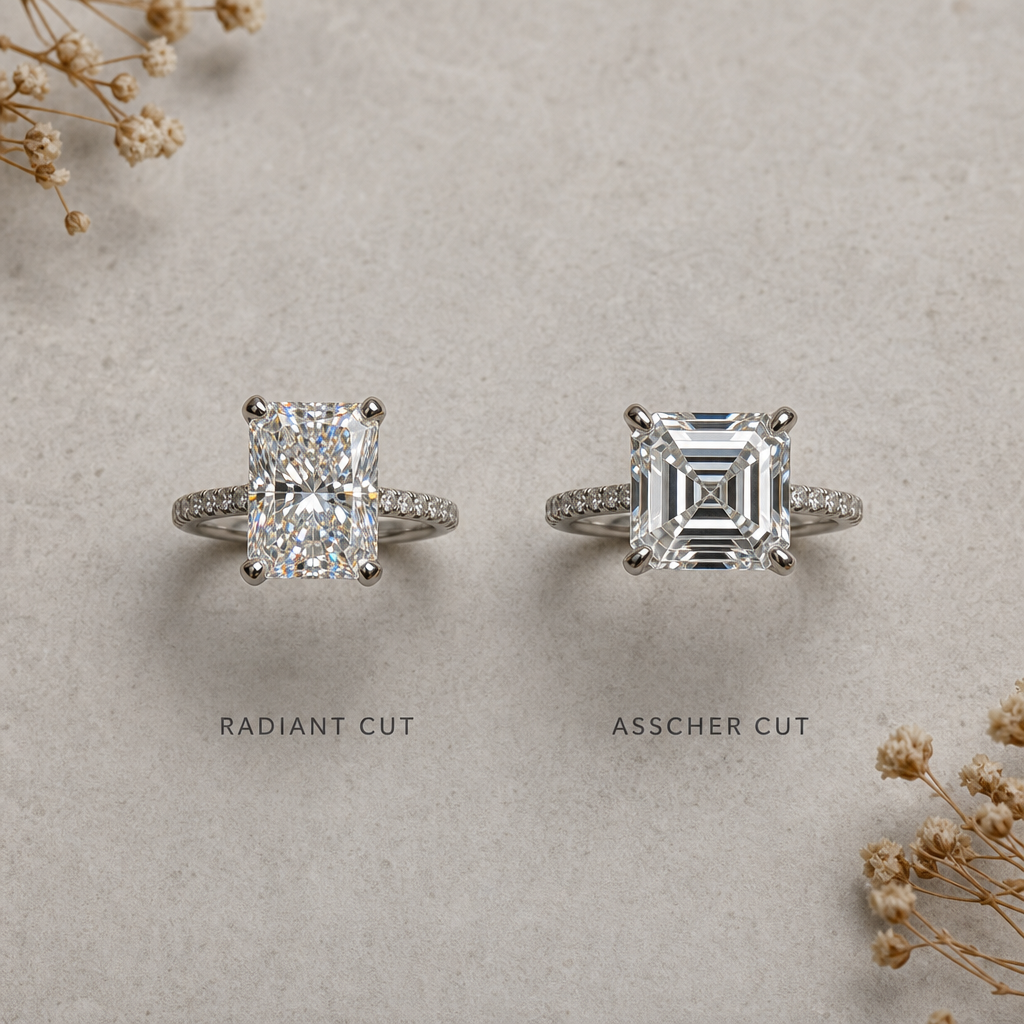
The radiant cut produces scattered, crushed-ice brilliance similar to a round diamond because of its brilliant facet arrangement. The Asscher cut produces large, defined flashes of light and a concentric square pattern when viewed from above, called the hall-of-mirrors effect, because of its step facets. They are optically opposite approaches, and the choice comes down to whether you prefer high-energy sparkle or dramatic, structured depth.
Which cut is better for hiding inclusions?
The radiant cut hides inclusions significantly better. Its brilliant facet pattern scatters light so extensively that inclusions are masked in most lighting conditions. VS2 or even SI1 clarity stones can appear eye-clean in radiant cuts. The Asscher cut's open step facets make inclusions far more visible, and VS1 clarity or better is strongly recommended to avoid inclusions that are noticeable to the naked eye.
Is a radiant cut or Asscher cut better for a vintage-style ring?
The Asscher cut is the clear choice for a vintage aesthetic. It was born in the Art Deco era and its geometric, architectural outline is inseparable from that period's design language. The radiant cut is a modern invention from 1977 and reads as contemporary rather than vintage regardless of the setting you choose for it.
Do radiant cuts look bigger than Asscher cuts of the same carat weight?
In most cases, yes. An elongated radiant cut covers more finger surface area than an Asscher cut of equal carat weight because its rectangular outline spreads the stone's mass across a longer footprint. A square radiant and an Asscher at the same carat weight will have more similar face-up sizes, but the radiant's brilliant facets tend to make it appear livelier and therefore visually larger in most lighting conditions.
Can I get a radiant or Asscher cut in moissanite from Livia Diamonds?
Yes. Livia Diamonds offers both radiant and Asscher cut moissanite and lab-created diamonds in a range of sizes and settings. As a Toronto-based jeweler with over 20 years of experience, they provide custom design services and both in-person and virtual consultations so you can compare stone options with expert guidance before purchasing.
Which fancy diamond shape is more durable for everyday wear?
The radiant cut has a slight durability advantage because its trimmed corners eliminate the vulnerable sharp points found on princess cuts. The Asscher's cropped corners provide similar protection. Both shapes are considered durable for everyday wear, but the radiant cut's brilliant facets also disguise minor surface wear and microscratches better than the Asscher's open step facets, which can show wear patterns more visibly over time.
Is the Asscher cut cheaper than the radiant cut?
Generally, yes, in the current market. The Asscher cut has more niche appeal than the radiant cut, which means lower demand and often better per-carat pricing for buyers who love the look. In the lab-grown diamond category specifically, this difference can represent meaningful savings on larger carat weights. However, vintage-era Asscher cuts in mined diamonds can command premiums for their historical rarity, so the price relationship depends on whether you are buying new or antique.
Which shape resonates more with your personal style, the explosive sparkle of the radiant cut or the refined, architectural depth of the Asscher? Share your thoughts or questions below, we would love to hear what drew you to each shape.