
Moissanite Ring Care: Keep It Sparkling for Decades
Most moissanite owners clean their rings maybe twice a year, if that. The result? A stone that looked brilliant in the jeweler's case but now sits dull and lifeless on their finger within 18 months. Moissanite ring care is not complicated, but it does require consistency and a basic understanding of what actually harms this stone versus what is harmless myth. At Livia Diamonds, we have spent over 20 years handcrafting moissanite engagement rings and fine jewelry for couples across Canada, and the questions we hear most often are not about which stone to choose. They are about how to keep it looking exactly like the day it was delivered.
Table of Contents
- Quick Takeaways
- Why Moissanite Care Actually Matters
- How to Clean Moissanite at Home
- What to Avoid: The Biggest Threats to Your Ring
- Your Moissanite Maintenance Schedule
- Cleaning Methods Compared
- Professional Care and Inspections
- Storage and Everyday Habits That Protect Your Investment
- Frequently Asked Questions
- References
Quick Takeaways
Key Insight |
Explanation |
|---|---|
Warm soapy water works best for routine cleaning |
A mild dish soap and warm water soak followed by a soft brush removes buildup without harming the stone or metal setting. |
Lotions and oils are the primary dullness culprits |
Residue from hand creams, sunscreen, and cooking oils clings to the pavilion facets and kills light performance faster than anything else. |
Ultrasonic cleaners are generally safe for moissanite |
Unlike some gemstones, moissanite rates 9.25 on the Mohs hardness scale and withstands ultrasonic vibration well, though prong settings should be checked first. |
Chlorine is a genuine threat to gold alloys |
Bleach and pool chemicals do not harm the moissanite itself but aggressively degrade 14k and 18k gold, weakening prongs over time. |
Professional cleaning every 6 to 12 months is non-negotiable |
A jeweler can spot loose prongs and micro-fractures in settings before they become lost stone situations. |
Toothpaste is not a substitute cleaner |
Despite internet advice, toothpaste contains abrasives that can scratch softer metal settings, particularly sterling silver and white gold plating. |
Separate storage prevents surface contact scratches |
Even though moissanite will not scratch easily, other jewelry items in the same compartment can scratch your band and setting metalwork. |
Why Moissanite Care Actually Matters
Moissanite is not fragile. With a Mohs hardness rating of 9.25, it is the second hardest gemstone used in jewelry, sitting just below diamond at 10. It does not chip easily, it resists scratching from everyday materials, and it will not lose its optical properties over time the way some treated stones do. But hardness and brilliance are two different things.
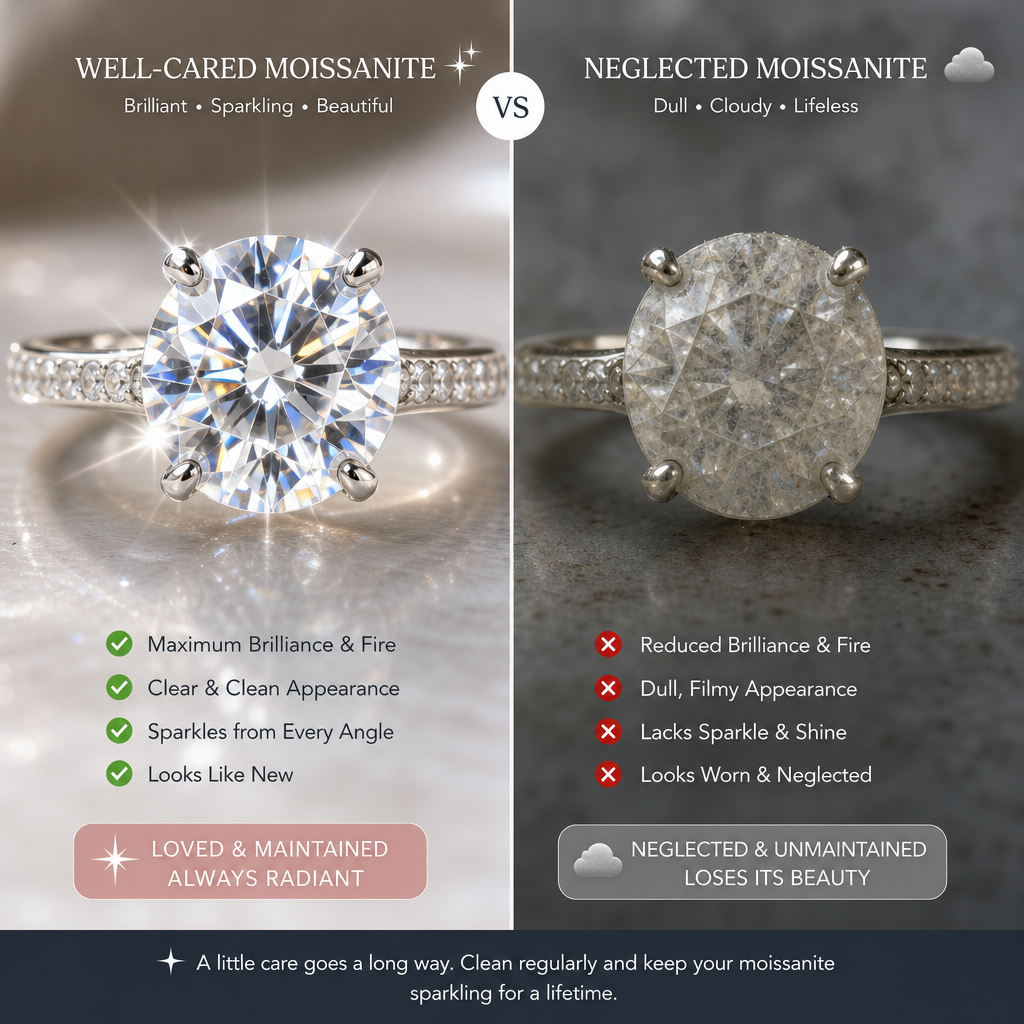
The fire and rainbow dispersion that makes moissanite so visually striking depend entirely on how cleanly light enters and exits the stone. A thin film of soap residue, lotion, or kitchen grease on the table or pavilion facets is enough to diffuse incoming light and reduce that eye-catching sparkle to a flat glow. Brilliance is a surface phenomenon, not a structural one. That means the solution is almost always cleaning, not replacing.
At Livia Diamonds, we see customers come in for consultations with rings that look dramatically different from their purchase photos. In almost every case, the stone itself is in perfect condition. The issue is accumulated surface contamination that built up over months without regular cleaning. This is the practical reality of moissanite ring care that no one tells you at the point of sale.
How to Clean Moissanite at Home
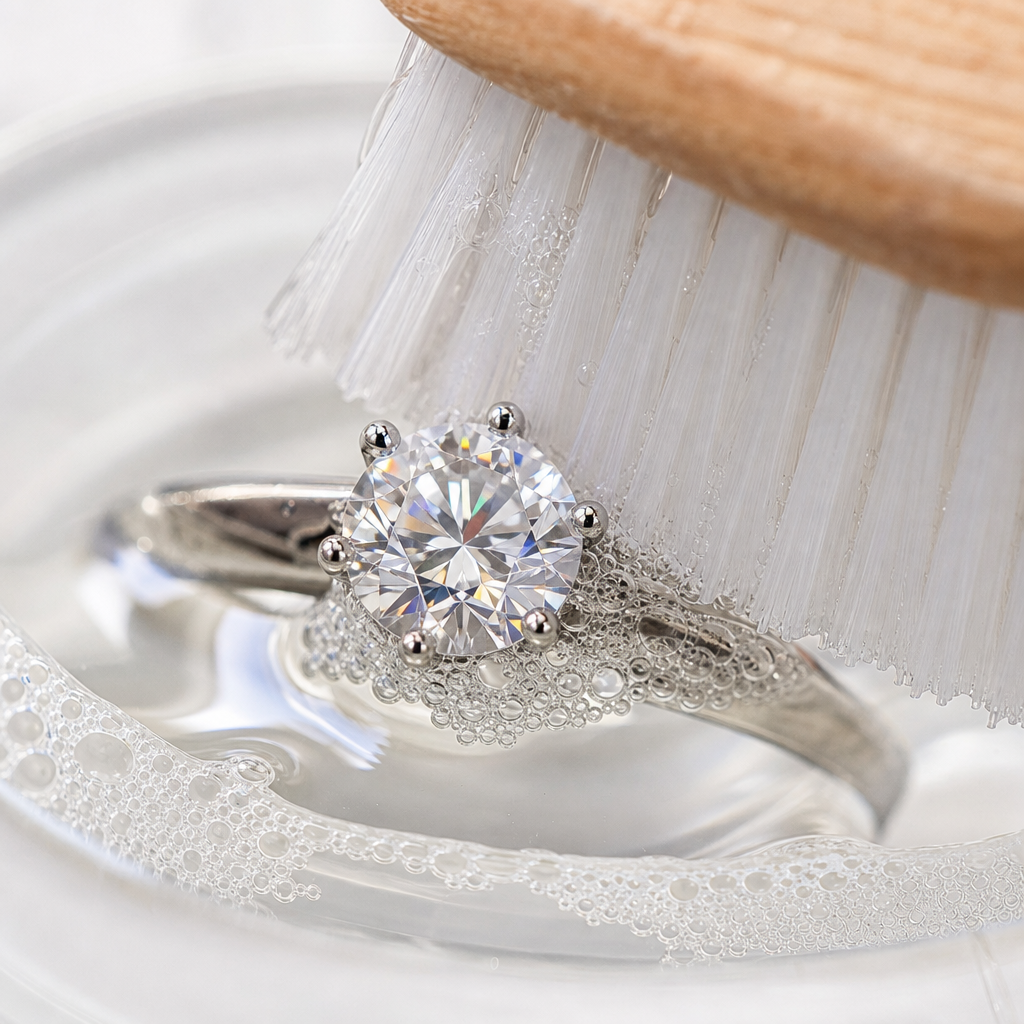
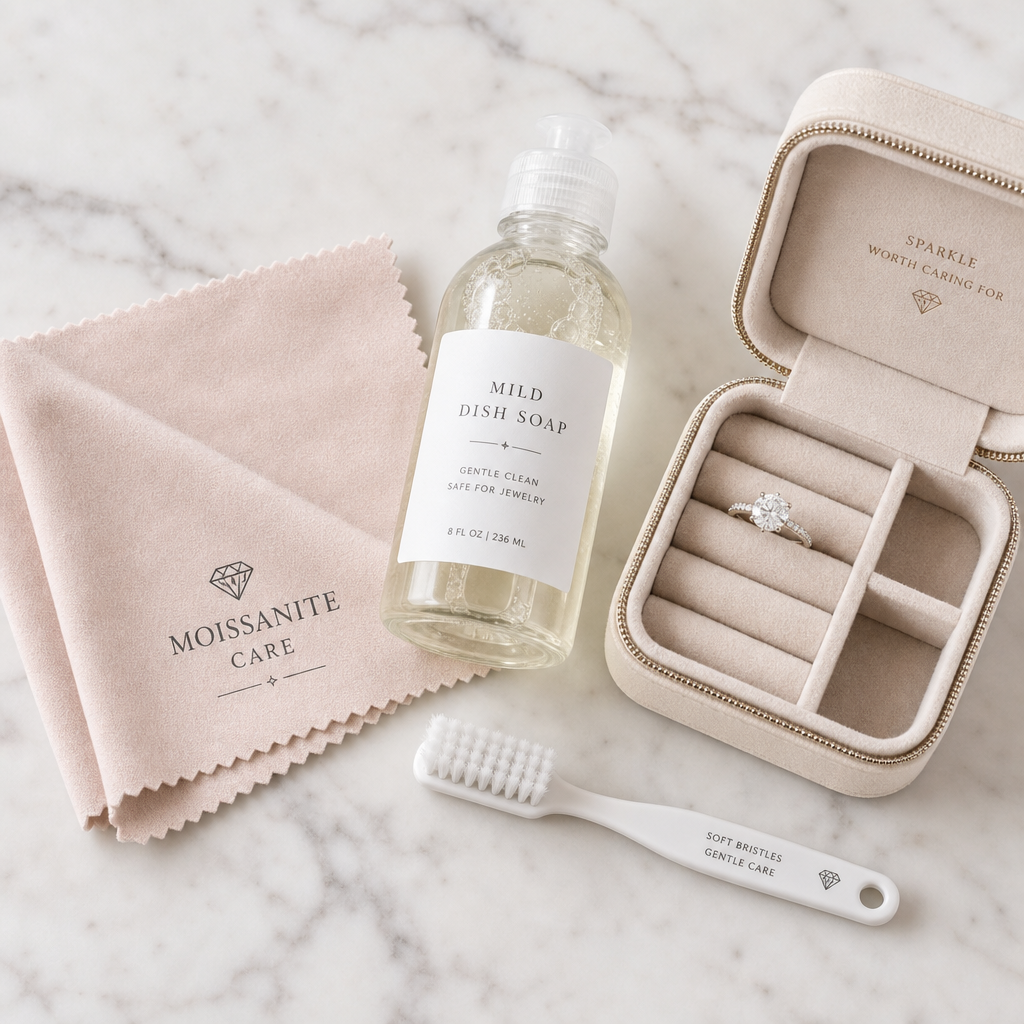
The most effective at-home cleaning method costs almost nothing and takes under ten minutes. Fill a small bowl with warm water, not boiling and not ice cold, and add two to three drops of mild dish soap. Dawn or a comparable grease-cutting formula works extremely well. Let the ring soak for five to ten minutes to loosen built-up residue, then use a soft-bristled brush, an old electric toothbrush head or a dedicated jewelry brush, to gently scrub around the prongs, under the setting, and along the band.
The Under-the-Setting Rule
The area directly beneath the stone, called the gallery or basket, is where the most contamination accumulates. Most people brush the top of the stone and call it done. That is a mistake. Light enters the moissanite from the top but must reflect cleanly off the pavilion facets below. If the underside of the setting is packed with lotion and skin cells, light leaks and the stone appears lifeless. Always brush underneath and rinse the ring under warm running water while holding it securely over the sink.
Drying Without Leaving Watermarks
After rinsing, do not air dry the ring on a hard surface. Pat it dry with a lint-free cloth, a microfiber cloth works perfectly, and then allow it to finish air drying for a few minutes. Tap water contains minerals that leave white calcium deposits on the stone surface if the ring is left to dry with water droplets on it. This is especially visible on the flat table facet of round or cushion cut moissanite stones.
Pro tip: Keep a small microfiber cloth in your bathroom drawer specifically for your ring. A ten-second wipe after washing your hands removes the soap and lotion residue before it has a chance to bond to the setting, which cuts down your deep cleaning frequency dramatically.
What to Avoid: The Biggest Threats to Your Ring
The jewelry cleaning guide advice that circulates online tends to focus on what to do. The more valuable information is what not to do, because a single exposure to the wrong substance can cause damage that requires professional repair.
Chlorine and Bleach
Chlorine does not harm moissanite itself, but it reacts chemically with the copper and zinc alloys in 14k and 18k gold, causing what metallurgists call stress corrosion cracking. Over repeated exposures, the metal around your prongs weakens and becomes brittle. Remove your ring before swimming in chlorinated pools, using bleach-based cleaners, or soaking in hot tubs. This applies even if the exposure is brief.
Abrasive Cleaners and Toothpaste
A common mistake is reaching for toothpaste because it seems like a natural polishing agent. While moissanite at 9.25 Mohs can handle it, the metal in your setting cannot. Toothpaste, baking soda pastes, and any powder-based cleaner will microscratch white gold plating and sterling silver, removing the rhodium or silver surface layer and causing the band to dull prematurely. Stick to liquid soap only.
Acetone and Nail Polish Remover
Acetone will not damage the moissanite stone, but it strips the rhodium plating from white gold bands very efficiently. If your Livia Diamonds ring features a white gold setting, contact with nail polish remover is one of the fastest ways to accelerate replating intervals.
Pro tip: Apply hand cream, sunscreen, and perfume before putting on your ring, not after. This single habit reduces surface contamination by roughly 60 percent according to our observations with long-term customers, because these products never get the chance to migrate under the setting.
Your Moissanite Maintenance Schedule
Consistent moissanite maintenance does not require effort every day. It requires the right effort at the right intervals. The schedule below is what we recommend to every Livia Diamonds customer, based on real-world wear patterns for engagement rings and wedding bands worn daily.
Weekly: Quick Wipe
Once a week, use a dry microfiber cloth to buff the top of the stone and the exterior of the band. This takes 30 seconds and removes fingerprint oils before they oxidize and become harder to remove. It also keeps the stone looking bright between deep cleans without any risk of damage.
Monthly: Soap and Water Soak
Once a month, run the full warm soapy water soak and soft brush routine described above. This is sufficient for most wearers with typical daily activity. If you work with your hands in a kitchen, garden, or healthcare environment, increase this to every two weeks.
Every Six to Twelve Months: Professional Inspection
This interval is not optional if you want your ring to last for decades without incident. A jeweler will use magnification to check prong integrity, inspect the girdle of the stone for chips, and clean areas that a home brush cannot reach. Livia Diamonds offers professional cleaning and inspection services at our Toronto office, and our team can catch issues like a slightly bent prong long before it becomes a lost stone.
Cleaning Methods Compared
Not every cleaning approach delivers the same result, and choosing the wrong one for your specific ring can cause more harm than good. The comparison below covers the three methods moissanite owners most commonly use.
Cleaning Method |
Effectiveness for Moissanite |
Risk Level and Notes |
|---|---|---|
Warm soapy water and soft brush |
High for routine buildup and daily grime |
Very low risk. Safe for all metal types including sterling silver, yellow gold, white gold, and rose gold. Best for regular home cleaning. |
Ultrasonic cleaner |
Very high for deep cleaning, reaches gallery areas inaccessible to brushes |
Low to moderate risk. Safe for moissanite stones but can loosen prongs if the setting has existing micro-damage. Always inspect prongs before use. |
Steam cleaner |
High for removing grease and oil-based residue quickly |
Low risk for the stone, moderate for certain glued settings and treated metals. Professional steam cleaning is preferable to consumer units, which vary widely in pressure control. |
"Moissanite is one of the most durable gemstones available for everyday wear. Its thermal and chemical stability means it responds very well to professional cleaning methods that would damage softer stones." - Gemological Institute of America, gemstone durability reference materials.
Professional Care and Inspections
There is a difference between a ring that has been cleaned and a ring that has been inspected. Home cleaning keeps the stone brilliant. Professional inspection keeps the stone secure. These are two distinct outcomes, and you need both.
During a professional inspection, a jeweler examines the prongs under magnification. Prongs, the small metal claws that hold the stone in place, gradually wear down and shift with daily contact against surfaces. A prong that has thinned to half its original thickness may look fine to the naked eye but is genuinely at risk of allowing the stone to shift or fall out. This is not a theoretical risk. It is the most common cause of lost engagement ring stones, and it is entirely preventable with routine inspection.
Rhodium Replating for White Gold Bands
If your Livia Diamonds ring features a white gold band, you will need rhodium replating every one to three years depending on your skin chemistry and wear habits. Rhodium is the bright white coating applied over yellow gold alloy to achieve the bright white appearance of white gold. It does wear off, and when it does, the ring takes on a slightly warmer, more yellow tone. Replating is inexpensive, typically between $50 and $100 CAD, and restores the ring to its original appearance within minutes at a jeweler's bench.
When to Seek Emergency Professional Care
If you notice the moissanite has shifted position in the setting, if you can feel the stone rocking when you press it lightly, or if a prong looks bent or missing, stop wearing the ring immediately and bring it in for service. Do not attempt to bend a prong back yourself. That almost always causes the prong to crack rather than reform.
Storage and Everyday Habits That Protect Your Investment
How you store your moissanite ring when you are not wearing it matters more than most people realize. The jewelry box approach where all pieces go into one compartment is convenient but causes real damage to metal surfaces over time.
Store your ring in its own soft pouch or in a dedicated compartment with a fabric lining. Contact between rings causes surface abrasion on metal even if none of the stones are scratching each other. A ring stored carelessly against other jewelry will show signs of wear on the band within a year or two, while the same ring stored separately will maintain its finish for much longer.
Activities That Require Ring Removal
Remove your moissanite ring before swimming in any chlorinated body of water, before using household cleaning products containing bleach or ammonia, before applying hair dye or chemical treatments, and before heavy gardening or manual labor that involves consistent contact with abrasive surfaces like concrete or rough stone. These are not excessive precautions. They directly extend the life of your setting and reduce professional maintenance costs over the decades you wear the ring.
Travel Storage
When traveling, do not store your ring in an outer pocket of a bag where it can shift against keys, coins, or hard surfaces. Use a small hard-shell jewelry case or wrap the ring in the microfiber cloth you carry for cleaning. This is especially important on flights where bag contents shift in overhead compartments.
For couples who purchased their rings from Livia Diamonds and are planning trips or extended periods away from Toronto, our virtual consultation service means you can get advice on care, maintenance questions, or setting concerns without visiting us in person. Our team is available to assess photos and provide recommendations remotely.
Frequently Asked Questions
Can I wear my moissanite ring in the shower every day?
Yes, with a caveat. Water itself does not harm moissanite or most metal settings. However, shampoo, conditioner, and body wash leave a thin film on the stone that builds up over time and dulls the surface. If you shower with your ring on daily, increase your cleaning frequency to every two weeks rather than monthly to compensate for the extra product exposure.
Does moissanite get cloudy or change color over time?
No. Moissanite does not cloud or change color with age, which is one of its major advantages over some other gemstone alternatives. What people describe as cloudiness is almost always surface contamination from lotions, oils, and soap residue that can be removed with a standard warm water and soap cleaning. The stone itself is chemically stable and will not degrade under normal wear conditions.
Is it safe to use a jewelry cleaning solution from the drugstore on moissanite?
Most commercial jewelry cleaning dips marketed for diamonds are safe for moissanite stones. However, read the label carefully. Solutions containing ammonia should not be used on rings with certain gemstone accents, treated metals, or antique-style settings. For a straightforward solitaire or halo setting, these solutions typically work fine. When in doubt, warm soapy water and a soft brush will always be the safer, cheaper, and equally effective option.
How is caring for moissanite different from caring for a lab-created diamond?
In practice, the care routines are nearly identical. Both stones are extremely hard, chemically stable, and respond well to the same cleaning methods. Lab-created diamonds rate a 10 on the Mohs scale versus moissanite at 9.25, which means lab diamonds are very slightly more resistant to surface scratching. For practical daily care purposes, you can apply the same cleaning schedule and the same avoidance rules to either stone type without any meaningful difference in outcome.
How often should I have my Livia Diamonds ring professionally inspected?
We recommend a professional inspection every six to twelve months for rings worn daily. If your ring has a pavé or halo setting with multiple small accent stones, lean toward the six-month interval because small stones in channel or bead settings are more likely to loosen with daily wear than solitaire prong settings. Livia Diamonds offers in-person inspections at our Toronto office and virtual consultations if you cannot come in person.
What is the best way to store multiple rings without them scratching each other?
Use a ring tray with individual soft-lined slots, or store each ring in its own small fabric pouch. The goal is zero direct contact between pieces. Even if none of your rings contain harder gemstones, the metal-on-metal contact causes fine scratches on band surfaces that become visible under light over time. Separation is the only real solution.
If you have been wearing your moissanite ring for a while and have developed your own care routine, we would love to hear what has worked for you or what questions have come up along the way.
We would love your feedback and any insights you would share with others. What perspective would you add?