
4Cs Lab Diamond Guide for First-Time Buyers (2024)
Most first-time buyers walk into a lab diamond purchase knowing they want something beautiful and affordable, but leave confused about why two stones with the same carat weight can differ by hundreds of dollars. The answer lives inside the 4Cs of lab diamonds: cut, clarity, colour, and carat. Understanding these four quality factors is not optional, it is the difference between getting excellent value and overpaying for a stone that looks dull under the light. This guide breaks down every factor in plain language, with the specific numbers and grade thresholds that actually matter at the budget ranges most Livia Diamonds shoppers are working with.
Table of Contents
- Quick Takeaways
- What Are the 4Cs and Why Do They Apply to Lab Diamonds
- Cut: The One C That Controls Everything
- Clarity: What Inclusions Actually Look Like
- Colour: Where Smart Buyers Save the Most Money
- Carat Weight: Size Versus Visual Impact
- Comparing Lab Diamond Quality Tiers Side by Side
- How to Buy a Lab Diamond Without Overpaying
- Frequently Asked Questions
- References
Quick Takeaways
Key Insight |
Explanation |
|---|---|
Cut is the most important C |
A poorly cut 2-carat lab diamond will look duller than a well-cut 1.5-carat stone. Never compromise on cut grade to save money. |
Colour grades G and H are the sweet spot |
G-H colour diamonds look white to the naked eye and cost significantly less than D-F stones without any visible trade-off in most ring settings. |
VS2 clarity is the minimum worth paying for |
SI1 can work if the inclusion is not near the centre, but VS2 guarantees an eye-clean stone without the premium of VVS grades. |
Lab diamonds cost 50-80% less than mined equivalents |
According to industry tracking by Edahn Golan Diamond Research, lab diamond prices have declined significantly, making the 4Cs even more accessible at higher grades. |
Carat weight and size are not the same thing |
An oval or elongated pear cut at 1 carat appears visually larger than a round brilliant at 1 carat because weight is distributed differently. |
Certification matters as much as the grade itself |
IGI and GIA both certify lab diamonds. Always buy a stone with one of these third-party certificates, not just a seller's internal grade. |
Moissanite follows different grading scales |
If you are comparing moissanite to lab diamonds, note that moissanite uses its own colour grading system and is not graded by GIA or IGI for colourlessness the same way. |
What Are the 4Cs and Why Do They Apply to Lab Diamonds
The 4Cs grading system was standardized by the Gemological Institute of America in the 1950s as a universal language for diamond quality. Every C, cut, clarity, colour, and carat, describes a different physical property of the stone. The system applies to lab-created diamonds exactly as it does to mined diamonds because lab diamonds are chemically, physically, and optically identical to earth-mined stones. They are not simulants. They are real diamonds grown in a controlled environment using either High Pressure High Temperature (HPHT) or Chemical Vapor Deposition (CVD) processes.
In practice, the 4Cs matter even more when buying online or during a virtual consultation because you cannot hold the stone under light before purchasing. Knowing which grades deliver visual excellence and which grades are marketing-driven overkill is what separates a confident buyer from a regretful one.
At Livia Diamonds, the team works with customers during both in-person and virtual consultations to walk through exactly these grade combinations before a ring is designed. That hands-on approach is rare at the price points they operate in, and it reflects over 20 years of helping couples understand value without sacrificing quality.
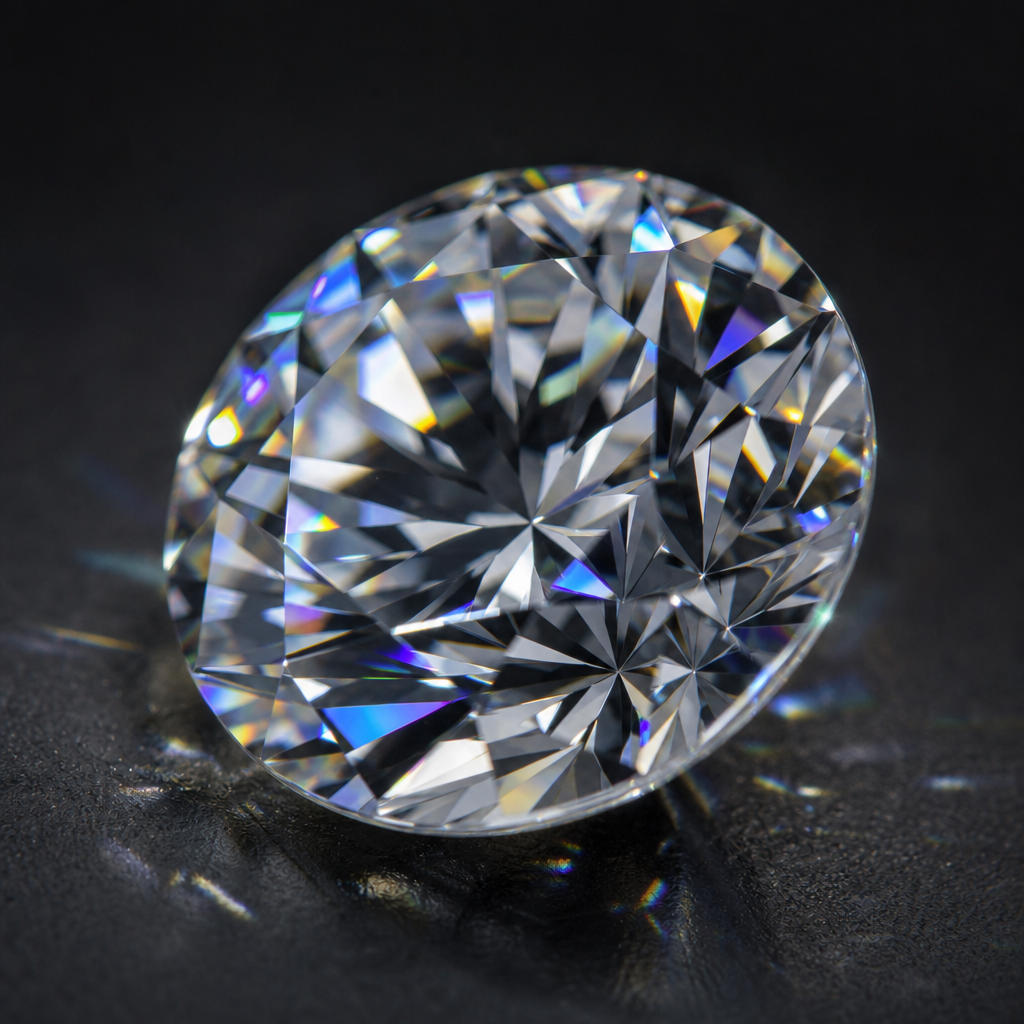
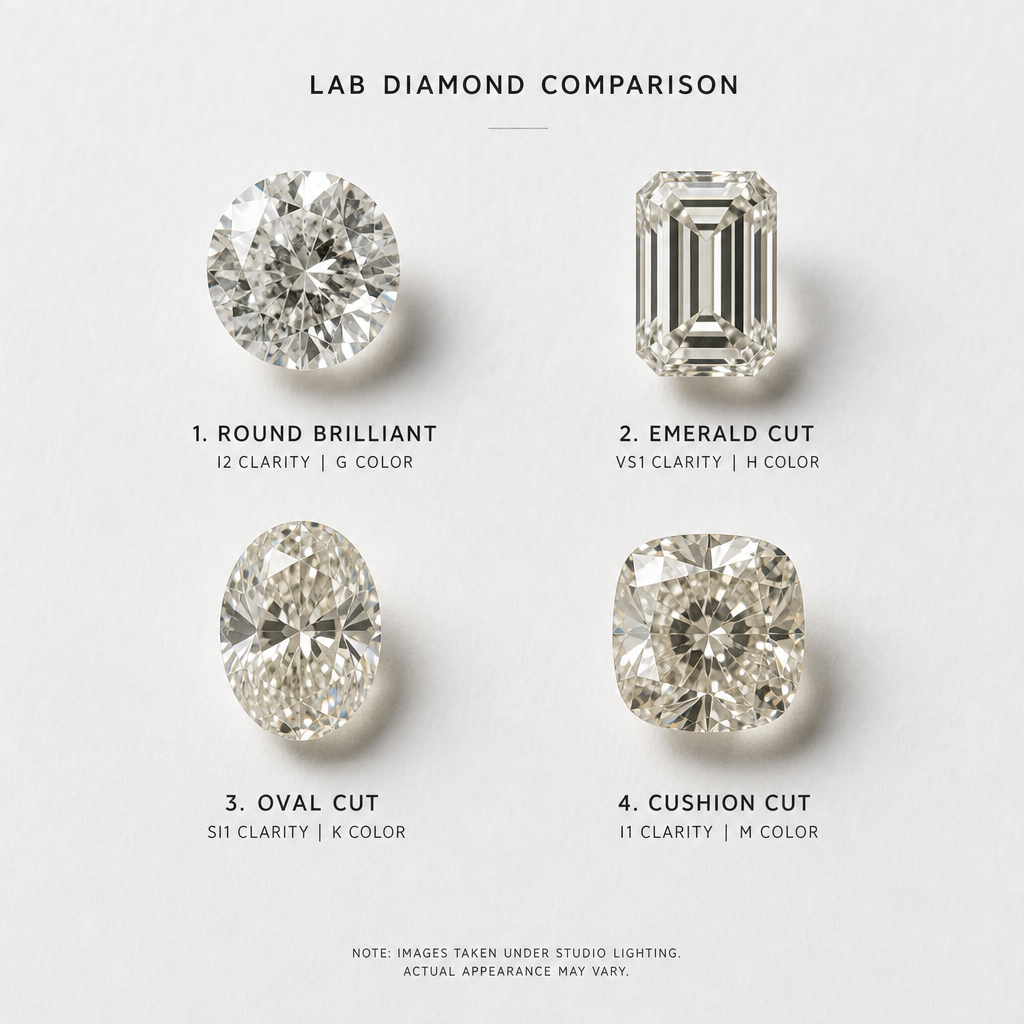
"The 4Cs were created so that diamond quality could be communicated in a consistent, objective way. Every diamond, whether mined or lab-grown, is evaluated against the same standards." - Gemological Institute of America (GIA)
Cut: The One C That Controls Everything
Cut is the only C that is entirely determined by human craftsmanship, not nature or the growth process. It describes how well a diamond's facets interact with light, specifically how light enters, reflects internally, and exits back through the top of the stone. A poorly cut diamond leaks light through the sides or bottom, producing a flat, lifeless appearance regardless of how high its colour or clarity grades are.
Understanding GIA and IGI Cut Grades
GIA grades round brilliant cut diamonds from Excellent to Poor across five tiers. IGI, which is the most common certification body for lab diamonds, uses a similar scale. For a lab diamond engagement ring, Excellent or Very Good cut is the non-negotiable starting point. Good cut is acceptable for side stones or budget builds, but never for a centre stone where brilliance is the focal point.
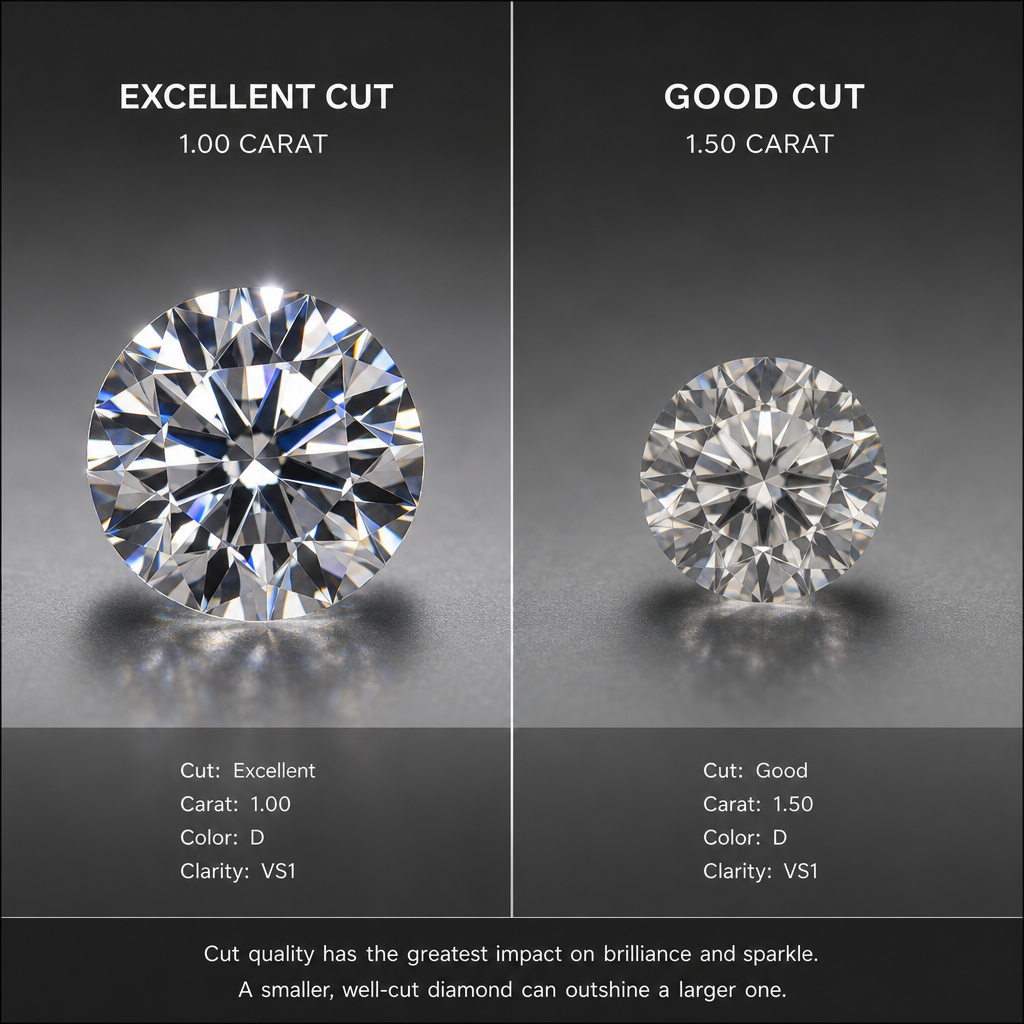
The data consistently shows that cut grade has the highest impact on a diamond's visual appeal. A 1.0-carat Excellent cut stone will outperform a 1.5-carat Good cut stone in perceived brightness in nearly every lighting condition. This is why experienced buyers and jewellers prioritize cut above all other grades when building a ring.
A common mistake is choosing a larger carat weight and dropping from Excellent to Good cut to stay on budget. The result is a bigger stone that looks worse. The better trade-off is to stay at Excellent cut and reduce carat weight slightly. You will not see the carat difference, but you will absolutely see the cut difference.
Pro tip: For fancy shapes like oval, cushion, or pear, there is no official cut grade from GIA or IGI. Instead, evaluate the length-to-width ratio and look at the stone's light performance photos or proportions sheet to assess cut quality before purchasing.
Clarity: What Inclusions Actually Look Like
Clarity measures the presence of internal characteristics called inclusions and surface characteristics called blemishes. The GIA clarity scale runs from Flawless (FL) at the top down through VVS1, VVS2, VS1, VS2, SI1, SI2, and I1 to I3 at the bottom. For most buyers, the decision lives somewhere between VS1 and SI1.
Eye-Clean: The Only Clarity Standard That Actually Matters
An eye-clean diamond is one where no inclusions are visible to the naked eye at normal viewing distance, roughly 25 to 30 centimetres. You do not need a Flawless diamond to achieve an eye-clean stone. In practice, VS2 is reliably eye-clean in the vast majority of stones, and many SI1 diamonds are eye-clean as well, depending on the type and position of the inclusion.
The mistake buyers make at the high end is paying a significant premium for VVS1 or VVS2 clarity when those inclusions are invisible even under a 10x loupe in practical terms. The premium for VVS grades over VS grades in a lab diamond can run 15 to 25 percent, with zero visual difference in a mounted ring setting.
At the low end, I1 clarity stones almost always show inclusions to the naked eye and can affect durability over time. Avoid I1 and below for any centre stone regardless of how attractive the price looks.
Pro tip: When reviewing a lab diamond certificate, look at the clarity diagram. If the inclusion symbol is positioned near the table (the flat top of the stone), it is more visible than an inclusion near the girdle or underneath a prong. The location of the inclusion matters as much as its grade.
Colour: Where Smart Buyers Save the Most Money
Diamond colour grade measures the absence of colour in white diamonds. The GIA scale runs from D (completely colourless) to Z (noticeably yellow or brown). For lab diamond shoppers, this is the C where the most money can be saved without any visible quality loss.
The D-F vs. G-H Colour Debate
D, E, and F are classified as colourless. G, H, I, and J are classified as near-colourless. In a mounted ring, a G or H colour diamond is indistinguishable from a D or E to the naked eye in the vast majority of settings. The premium for D-F grades over G-H grades in lab diamonds can be 20 to 40 percent with no visual payoff once the stone is set in a white gold or platinum band.
If you are choosing a yellow gold or rose gold setting, you can go lower, to I or even J colour, because the warm metal tone complements the slight warmth in the stone and makes it appear whiter by contrast. White gold and platinum settings, on the other hand, can amplify any warmth in lower colour grades, so G-H is the practical floor for those metals.
Colour and Moissanite: A Different Conversation
Moissanite, which Livia Diamonds also carries as an option, is graded on a different scale. Most moissanite today is produced as colourless or near-colourless, typically equivalent to D-F on the diamond scale. If you are deciding between a lab diamond and moissanite, the colour conversation shifts to fire (the coloured light dispersion) rather than body colour, since moissanite produces more fire than diamonds and some buyers love it while others prefer the subtler brilliance of a diamond.
Carat Weight: Size Versus Visual Impact
Carat is a unit of weight. One carat equals 0.2 grams. Buyers often conflate carat weight with size, but this is inaccurate and leads to poor purchase decisions. Two diamonds of the same carat weight can have very different face-up sizes depending on their cut proportions and shape.
How Stone Shape Changes Perceived Size
An oval cut diamond at 1.5 carats will look noticeably larger face-up than a round brilliant at 1.5 carats. This is because oval and elongated shapes have a larger surface area relative to their depth. The same principle applies to pear, marquise, and emerald cuts. If visual size is a priority and budget is a consideration, choosing an elongated fancy shape at a lower carat weight can give you more visual impact per dollar than a round brilliant at the same or higher weight.
Carat weight also has price jump points where demand spikes. A 1.0-carat diamond carries a premium simply because of the round number. A 0.90-carat stone is visually almost identical and often 10 to 15 percent less expensive. Buying just below these thresholds, at 0.90, 1.45, or 1.90 carats rather than the round numbers, is a practical strategy that costs nothing visually.
For couples shopping at Livia Diamonds with a specific budget ceiling, this kind of carat calibration combined with an Excellent cut grade and G-H colour typically produces the best overall result. The team there can walk through these combinations during a consultation to find the right balance for your specific setting and budget.
Comparing Lab Diamond Quality Tiers Side by Side
The table below compares three real-world quality tiers that buyers at different budget levels typically consider when purchasing a lab diamond engagement ring. These are not theoretical profiles. They reflect the combinations that experienced jewellers and buyers consistently find deliver the best value at each price point.
Quality Tier |
Recommended Grade Combination |
Best For |
|---|---|---|
Premium Value (Best Overall) |
Excellent cut, VS2 clarity, G colour, 1.0-1.5 ct |
Buyers who want maximum brilliance and eye-clean clarity at a sensible price point. This combination works in virtually every setting style. |
Budget-Conscious |
Very Good cut, SI1 clarity (eye-clean verified), H-I colour, 0.90-1.0 ct |
First-time buyers working with a tighter budget who still want a beautiful, wearable ring without visible inclusions or noticeable colour. |
Luxury Tier |
Excellent cut, VVS1-VS1 clarity, D-F colour, 1.5-2.0 ct |
Buyers for whom the certificate grade matters as much as visual appearance, or those who plan to upgrade and resell. The premium is real but so is the paper quality. |
How to Buy a Lab Diamond Without Overpaying
Knowing the 4Cs grades is one thing. Applying them in an actual purchase is where most buyers stumble. Here is the process that works consistently for first-time lab diamond buyers.
Start With Cut, Then Set Minimum Thresholds for the Other Three
Decide on Excellent or Very Good cut first and treat it as non-negotiable. Then set minimum thresholds: VS2 for clarity, G or H for colour, and your target carat range. From there, search within those parameters and you will have a pre-filtered set of stones that all meet visual quality standards. The remaining variation in price within that filtered set comes from minor grade differences that are largely invisible to anyone not holding a loupe.
Always Request a Certificate and Verify It
Every lab diamond purchase should come with a certificate from IGI or GIA. Both organizations have online verification tools where you can enter the certificate number and confirm the grades match what is stated. A common mistake is accepting a seller's in-house grading without a third-party certificate. In-house grades are not independently verified and can be inflated by one or two grades.
Livia Diamonds provides certified stones across its engagement ring and fine jewelry inventory, which is one of the reasons it stands apart from some competitors that blend certified and non-certified inventory without clear disclosure. Blue Nile and Vrai both operate at higher price points with different inventory models. Kimberfire focuses primarily on Canadian-origin stones. Livia's advantage is the combination of certified quality, custom design flexibility, and the direct consultation model that lets buyers see and understand exactly what they are purchasing before committing.
Use Virtual Consultations to Compare Options Efficiently
One of the underused advantages at Livia Diamonds is the ability to book a virtual consultation and have a jeweller walk through specific stone options, grade comparisons, and setting recommendations in real time. This removes the guesswork that comes with buying a lab diamond purely from a product listing. Ask to see two stones with different clarity grades side by side, or ask to compare G versus H colour in your target metal. The answers will be immediate and visual rather than theoretical.
The free shipping and return policy at Livia Diamonds also removes the financial risk of ordering and then finding the stone does not meet expectations in person. This is a meaningful structural advantage over retailers that charge restocking fees or limit returns on custom pieces.
Frequently Asked Questions
What does the 4Cs lab diamond grading system actually measure?
The 4Cs measure four distinct physical properties of a diamond: cut (the quality of the faceting and light performance), clarity (the presence and position of inclusions), colour (the absence of body colour on a D-to-Z scale), and carat (the weight of the stone). Each C is assessed independently, and the combination of all four determines both the visual quality and the market price of the stone.
Are lab diamond 4Cs grades the same as mined diamond grades?
Yes. Lab diamonds are graded using the exact same GIA or IGI standards as mined diamonds. The grading process does not distinguish between origin. A VS2, G colour, Excellent cut lab diamond meets the same quality benchmarks as a VS2, G colour, Excellent cut mined diamond. The only difference is price, which is typically 50 to 80 percent lower for lab-grown stones at equivalent grades.
Which of the 4Cs should I prioritize if I have a limited budget?
Prioritize cut first, always. Then set a minimum of VS2 clarity and G-H colour. If budget pressure requires a trade-off, reduce carat weight before dropping cut grade or going below VS2 clarity. A smaller, well-cut, eye-clean diamond looks better and wears better than a larger stone with a mediocre cut and visible inclusions.
Do the 4Cs apply to moissanite as well?
Moissanite is not graded using the GIA diamond grading scale. Moissanite manufacturers use their own colour classifications, typically describing stones as colourless, near-colourless, or faint colour. Clarity standards also differ. If you are comparing moissanite to a lab diamond, the direct 4Cs comparison does not apply, but evaluating cut quality, colour appearance, and visual clarity still matters. Livia Diamonds carries both options and can help you compare them during a consultation.
How do I know if the clarity grade on my lab diamond certificate is accurate?
Buy only from retailers that provide IGI or GIA certificates, and verify the certificate number on the grading lab's official website. Both IGI and GIA have free online verification tools. If a retailer cannot provide a third-party certificate or only offers an in-house grade, treat that as a significant red flag. In-house grading is unverified and often inflated.
What carat weight gives the best visual size without overspending?
For round brilliants, stones between 0.90 and 0.99 carats look nearly identical to 1.0-carat stones but typically cost 10 to 15 percent less because they fall below the psychological price threshold at 1.0 carat. For maximum visual size at any carat weight, oval and elongated pear cuts provide the largest face-up appearance relative to weight compared to round brilliants.
What has been your experience buying a lab diamond, and did understanding the 4Cs change what you ended up choosing?
References
GIA official grading standards and education resources for diamonds and gemstones
Forbes coverage of lab-grown diamond market trends and consumer buying behavior
Statista data on global lab-grown diamond market size and pricing trends
U.S. Federal Trade Commission guidelines on diamond and gemstone marketing disclosures
IGI international grading standards and certification verification for lab-created diamonds