
10 Reasons to Choose a Moissanite Engagement Ring 2026
If you have spent any time ring shopping recently, you already know the sticker shock is real. A single-carat diamond engagement ring can run anywhere from $3,000 to $15,000 depending on quality, and that is before you factor in the band, resizing, or insurance. That price wall is pushing more couples to ask a smarter question: why pay more when a moissanite engagement ring 2026 can deliver equal or better brilliance, lasting durability, and a clear ethical origin story? This guide breaks down exactly why moissanite is the most compelling ring choice this year, with direct comparisons and honest guidance for couples who want a stunning ring without the financial hangover.
Table of Contents
- Quick Takeaways
- Reason 1: The Price Difference Is Dramatic and Real
- Reason 2: Moissanite Actually Outsparkles Diamonds
- Reason 3: It Is Built for a Lifetime of Everyday Wear
- Reason 4: The Ethical Origin Story Is Airtight
- Reason 5: Modern Moissanite Comes in True Colorless Grades
- Reason 6: Your Budget Stretches Further Into Custom Design
- Reason 7: You Can Go Bigger Without Going Broke
- Reason 8: Lab-Grown Consistency Means Fewer Nasty Surprises
- Reason 9: Moissanite Holds Its Own Against Every Major Alternative
- Reason 10: Finding a Specialist Makes All the Difference
- Frequently Asked Questions
- References
Quick Takeaways
Key Insight |
Explanation |
|---|---|
Moissanite costs a fraction of diamond |
A comparable one-carat moissanite typically costs between $300 and $600, versus $3,000 to $15,000 for a mined diamond of similar size and quality. |
Higher refractive index means more fire |
Moissanite has a refractive index of 2.65 to 2.69, compared to diamond's 2.42. That difference is visible in direct light. |
9.25 on the Mohs scale is genuinely hard |
Moissanite is harder than sapphires and rubies, making it highly resistant to scratching during daily wear. |
Colorless grades now match D-E-F diamonds |
Premium moissanite is graded in the colorless D-E-F range, so the icy white look couples want is fully achievable. |
Lab-grown origin removes ethical ambiguity |
Every moissanite sold today is lab-created, meaning no mining, no conflict sourcing, and a traceable supply chain. |
Savings unlock better custom design |
With thousands freed up, couples can invest in handcrafted settings, unique band styles, and premium metals that would be out of reach with a mined diamond budget. |
Specialist retailers matter more than platform size |
A family-run jeweler with moissanite-specific expertise and in-person or virtual consultation options will guide you to a better result than a large generic marketplace. |
Reason 1: The Price Difference Is Dramatic and Real
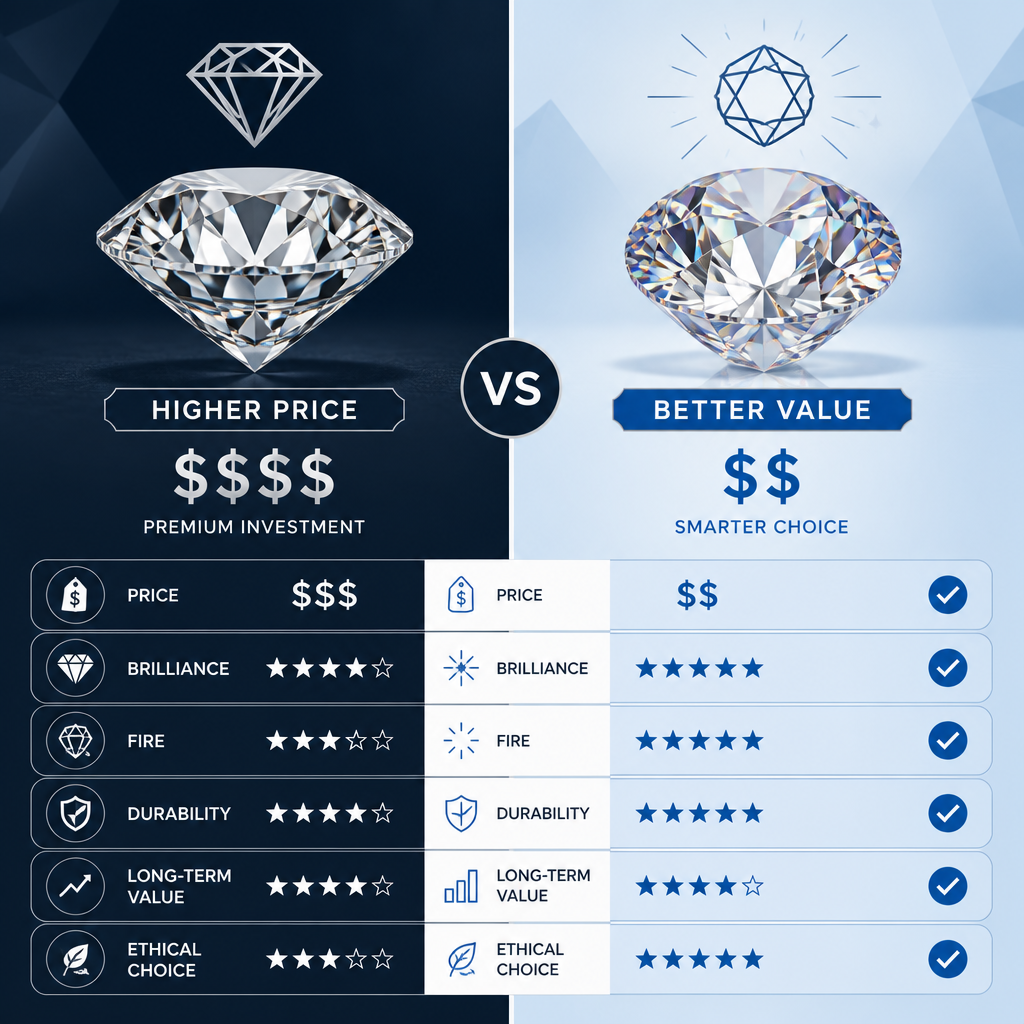
No amount of brand storytelling changes the math. A one-carat mined diamond engagement ring typically costs between $3,000 and $15,000 depending on cut, color, clarity, and carat weight. A comparable one-carat moissanite typically lands between $300 and $600. That is not a minor discount. That is a fundamentally different financial decision.
For couples in Toronto and across Canada, that gap is especially significant when you layer in the cost of living, wedding expenses, and the reality that most household budgets have not grown at the same pace as diamond retail prices. Choosing an affordable engagement ring built around moissanite is not a compromise. It is a deliberate, informed choice that frees up real money.
Pro tip: Use the money you save on the center stone to invest in a better metal (solid 14k or 18k gold instead of gold-plated), a more intricate setting, or a matching wedding band. The total look will be more impressive than a plain solitaire mined diamond in a basic prong setting.
Reason 2: Moissanite Actually Outsparkles Diamonds
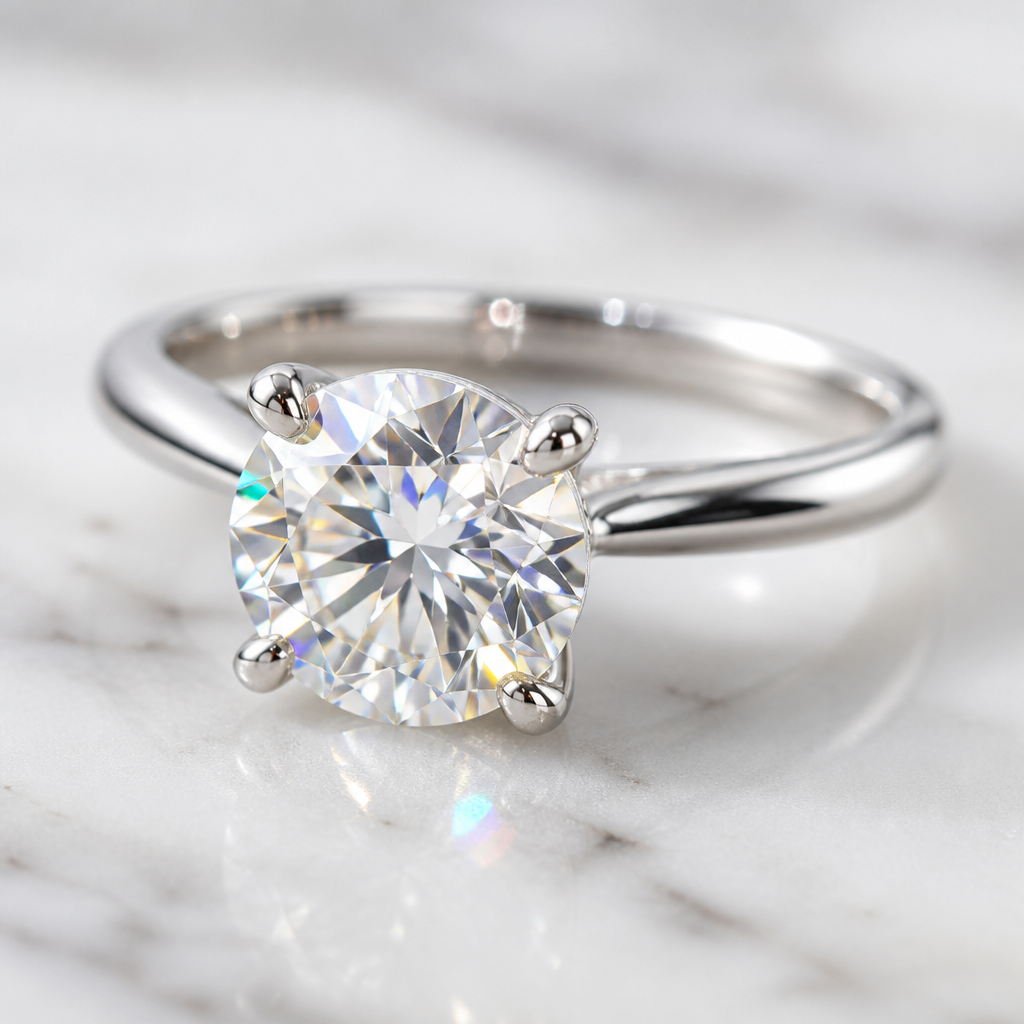
This is the point that surprises most first-time buyers. Moissanite has a refractive index of 2.65 to 2.69. Diamonds sit at 2.42. A higher refractive index means light bends more dramatically inside the stone, producing more dispersion, those rainbow flashes of color known as "fire." In practical terms, a moissanite ring catches the eye more aggressively in most lighting conditions.
Some people prefer diamond's subtler, whiter sparkle. That is a valid preference. But if you have ever been at a dinner table and noticed someone's ring lighting up across the room, there is a good chance it was moissanite. The fire is distinctive and genuinely striking.
What "fire" looks like on your finger day to day
In indoor office lighting, moissanite throws more colorful flashes than a diamond of the same size would. In outdoor sunlight, both stones are exceptional. The difference becomes most noticeable in low or warm ambient light, where moissanite's higher dispersion creates a livelier appearance. Couples who want a ring that commands attention in any room consistently report satisfaction with moissanite's performance in real-world wear.
Reason 3: It Is Built for a Lifetime of Everyday Wear
A common concern about any diamond alternative is whether it will hold up over years of daily wear. Moissanite scores 9.25 on the Mohs hardness scale. That places it harder than sapphires, rubies, and virtually every other gemstone used in fine jewelry. Only diamond, at a perfect 10, is harder.
In practice, a 9.25 rating means moissanite is highly resistant to scratching from everyday contact with surfaces, keys, gym equipment, and household tasks. Chipping is also uncommon because of the stone's toughness rating. This is a stone you can wear every day for decades without treating it like it is fragile.
A gemstone that rates 9.25 on the Mohs hardness scale is not a soft alternative to diamond. It is a genuinely hard stone that earns its place in a ring worn every day for a lifetime.
Rings from jewelers like Livia Diamonds' moissanite ring collection are handcrafted with the durability of the stone fully in mind, pairing it with settings and metals designed for long-term wear, not just display in a case.
Reason 4: The Ethical Origin Story Is Airtight
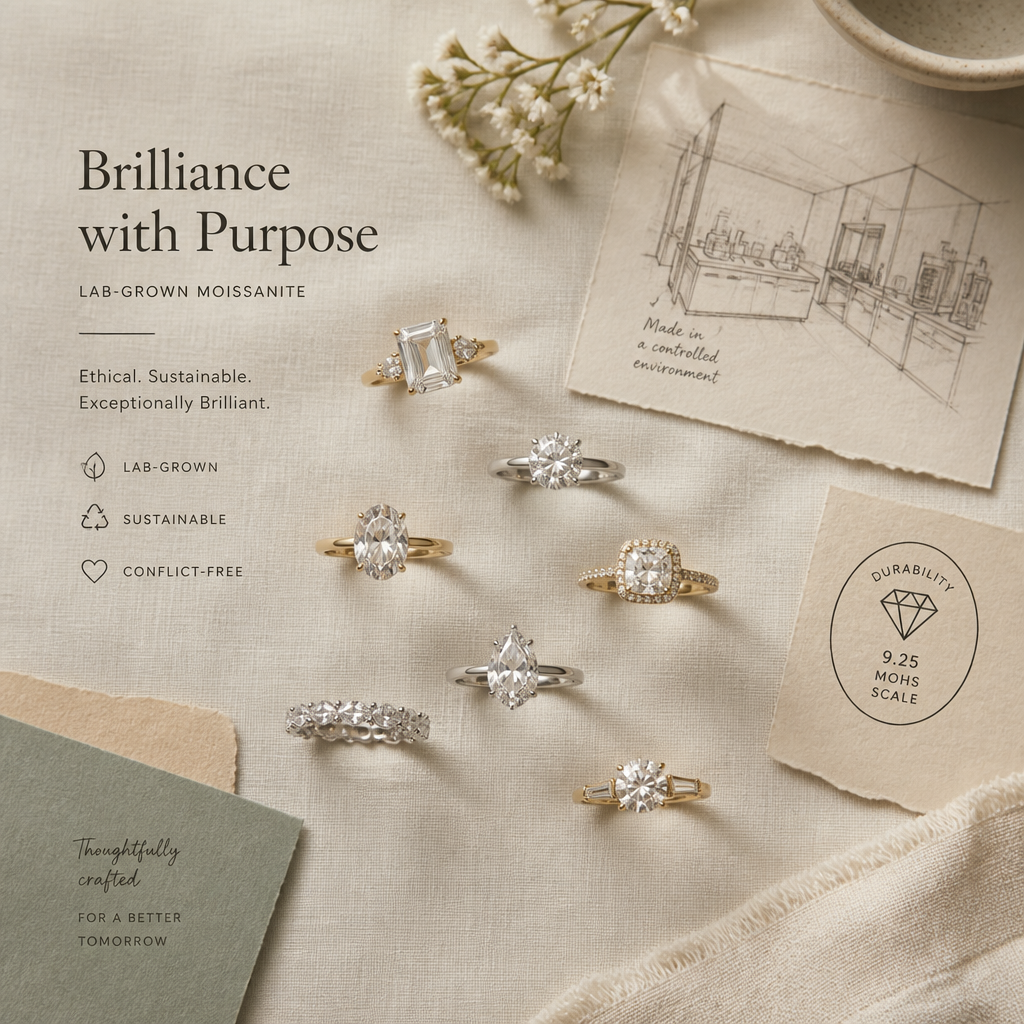
Every moissanite sold commercially today is lab-created. Natural moissanite, first discovered in 1893 inside a meteorite in Canyon Diablo, Arizona, is extraordinarily rare in nature. Because of that scarcity, the entire modern moissanite supply comes from laboratory production using advanced technology in controlled environments. This means no mining, no land disruption, no questions about conflict sourcing.
This matters to a growing number of couples who want their ring to reflect their values. The mined diamond industry has made significant improvements in traceability, but the ethical questions around mining practices and supply chain oversight have not fully disappeared. With moissanite, there is no ambiguity. You know exactly where it came from.
Pro tip: When shopping for a moissanite engagement ring, ask your jeweler specifically about the origin of the stone and what certification accompanies it. A reputable jeweler should be able to provide clear documentation without hesitation.
Reason 5: Modern Moissanite Comes in True Colorless Grades
Earlier generations of moissanite had a visible yellowish or greenish tint in certain lighting conditions. That criticism is outdated. Premium moissanite available today is graded in the D-E-F colorless range, which is the same top tier used for the finest diamonds. The result is the crisp, icy white appearance that most couples picture when they imagine their ideal ring.
This improvement is not cosmetic marketing. It reflects genuine advances in how moissanite is grown in laboratory settings. The stone you buy in 2026 is a meaningfully better product than what was available even a few years ago. If you last researched moissanite and walked away unimpressed by color quality, it is worth looking again.
How to evaluate color when shopping online or in person
Ask to see the moissanite in multiple lighting environments, including natural daylight and warm indoor light. Request the grading documentation for the specific stone. Look for "Forever One" or equivalent premium-grade certifications from established labs that confirm colorless classification. A jeweler offering in-person or virtual consultations, like the team at Livia Diamonds, can walk you through color grades visually so you are not guessing from a product photo.
Reason 6: Your Budget Stretches Further Into Custom Design
This is one of the most underappreciated advantages of choosing moissanite. When you spend $400 on your center stone instead of $4,000, you have resources to invest in the things that make a ring truly unique: the setting style, the metal type, the band details, the overall craftsmanship.
Custom design is no longer a luxury reserved for buyers with diamond budgets. A moissanite center stone paired with a hand-engraved band, a halo setting, or a distinctive vintage-inspired design can look more personal and more impressive than a plain solitaire mined diamond in a standard four-prong setting. The ring becomes a reflection of the person wearing it, not just a financial statement.
Livia Diamonds offers custom design services specifically for this reason. Couples who arrive with a moissanite budget routinely end up with rings that feel far more tailored than anything they could have achieved at the same total cost with a mined diamond center stone. Explore the custom engagement ring design options at Livia Diamonds to see what is possible at your budget.
Reason 7: You Can Go Bigger Without Going Broke
There is a direct relationship between carat size and diamond price that escalates sharply above one carat. A two-carat mined diamond can cost three to five times more than a one-carat stone of comparable quality, not just twice as much, because large high-quality diamonds are genuinely rare. With moissanite, that exponential pricing curve does not apply in the same way.
Couples who want the visual presence of a larger center stone can achieve it with moissanite without stretching their budget into uncomfortable territory. A two-carat moissanite delivers real visual impact. It is not a "fake big" ring. It is a large, brilliant, hard gemstone that earns that description honestly.
A common mistake is assuming that going bigger automatically means going cheaper in quality. The right approach is to choose the size that looks proportional and beautiful on the wearer's hand, and let the savings from moissanite allow you to make that choice freely rather than defaulting to a smaller size because of budget constraints.
Reason 8: Lab-Grown Consistency Means Fewer Nasty Surprises
One of the quiet frustrations of buying mined diamonds is the variability. Two stones that appear similar on a grading report can look noticeably different in person because of differences in cut quality, inclusions placement, fluorescence behavior, and other factors that grading certificates do not fully capture. Shopping for a mined diamond requires either expert knowledge or a lot of trust in your jeweler.
Moissanite produced in a laboratory environment is highly consistent. The controlled growth process results in stones with predictable optical properties, reliable color grades, and very few internal inclusions. What you see in a well-photographed product listing is much closer to what you will receive. This predictability reduces the risk of disappointment, especially for buyers shopping online or with limited gemological knowledge.
Reason 9: Moissanite Holds Its Own Against Every Major Alternative
The engagement ring market offers several stone options beyond mined diamonds, and each has genuine trade-offs worth understanding. Here is a direct comparison of the three most relevant choices for couples in 2026 who are weighing why choose moissanite against the alternatives.
Feature |
Moissanite |
Lab-Created Diamond |
Mined Diamond |
|---|---|---|---|
Typical price for 1 carat |
$300 to $600 |
$800 to $2,500 (approx.) |
$3,000 to $15,000 |
Hardness (Mohs scale) |
9.25 |
10 |
10 |
Refractive index (fire) |
2.65 to 2.69 (highest fire) |
2.42 |
2.42 |
Ethical origin clarity |
Fully lab-grown, no mining |
Fully lab-grown, no mining |
Variable, depends on sourcing |
Colorless grades available |
Yes, D-E-F equivalent |
Yes, IGI or GIA certified |
Yes, but at significant premium |
Best for |
Maximum visual impact per dollar |
Buyers wanting "diamond" classification |
Buyers prioritizing rarity and tradition |
Lab-created diamonds are a strong choice for buyers who specifically want a stone classified as a diamond. Moissanite wins on fire, affordability, and the ability to go larger at the same price point. Mined diamonds remain the choice for buyers for whom rarity and tradition carry personal or symbolic weight. None of these is a wrong answer. The right answer depends on what the couple actually values, not on marketing pressure.
Reason 10: Finding a Specialist Makes All the Difference
Buying a moissanite engagement ring from a large generic marketplace and buying one from a specialist jeweler are genuinely different experiences. Large platforms like Blue Nile or VRAI are built around volume and category breadth. They serve buyers who already know what they want and need a transaction. They are less suited to the couple who needs guidance, wants custom design input, or is comparing moissanite against lab-created diamonds and needs honest, specific advice rather than filtered search results.
A family-run jeweler with dedicated moissanite expertise, in-person and virtual consultation options, flexible payment plans, free shipping, and over 20 years of handcrafting experience is a fundamentally different resource. Livia Diamonds, based in Toronto, exists specifically for the buyer who wants an affordable engagement ring that does not look or feel like a budget compromise. Their team can walk you through stone selection, band styles, custom modifications, and ring sizing in a way that a website filter system never can.
The consultation, whether in person or virtual, changes the decision. Couples who arrive uncertain leave with clarity on exactly what they want and confidence in the ring they choose. That is the real value of a specialist over a marketplace, and it is worth accounting for when you are deciding where to shop.
Browse the full Livia Diamonds engagement ring collection or book a consultation to get personalized guidance on your moissanite ring options.
Frequently Asked Questions
Is moissanite a fake diamond?
No. Moissanite is a distinct gemstone composed of silicon carbide. It is not a diamond simulant in the same category as cubic zirconia, which is chemically and optically far inferior. Moissanite is a real gemstone with its own hardness, refractive index, and durability profile. It is genuinely different from diamond, not a copy of one.
Will a moissanite engagement ring hold up for decades?
Yes. At 9.25 on the Mohs scale, moissanite is harder than sapphires and rubies and highly resistant to scratching and chipping. Rings worn daily for 20 or 30 years by customers consistently report that the stone retains its appearance without requiring replacement or re-polishing. The main maintenance requirement is the same as any fine jewelry: periodic cleaning and inspection of prong settings.
Can people tell the difference between moissanite and diamond without special equipment?
In most social settings, no. The differences in appearance between a high-quality colorless moissanite and a comparable diamond are not detectable to the untrained eye. The fire produced by moissanite is actually more vivid than diamond, which some people might notice if they are looking closely. A standard diamond tester pen will read moissanite differently than diamond, but no one at a dinner party or wedding is running gem tests.
Does moissanite lose its sparkle over time?
No. Unlike cubic zirconia, which can cloud and scratch over time, moissanite retains its optical properties indefinitely. The refractive index of the stone does not change with age. A ring that sparkles brilliantly on the day you buy it will sparkle the same way in 30 years, provided it is cleaned regularly with mild soap and water.
Why choose moissanite over a lab-created diamond?
The primary reasons are price and fire. Moissanite costs significantly less than a lab-created diamond of comparable size, and its higher refractive index produces more visible fire and brilliance. If you want the classification of "diamond" on your certification, a lab-created diamond is the right choice. If you want maximum visual impact per dollar and are comfortable with a stone that is categorized as moissanite, it is the stronger value proposition in 2026.
What ring styles work best with a moissanite center stone?
Moissanite works well in virtually every setting style: solitaire, halo, three-stone, pavé, vintage-inspired, and east-west designs. Because of its high fire, it tends to look especially striking in halo settings, where the surrounding stones amplify the center stone's brilliance. Simple solitaire settings also work beautifully because they do not compete with the stone's natural sparkle. The best setting is ultimately the one that suits the wearer's personal style and hand shape, which is exactly what a jeweler consultation helps you determine.
Have you already made the switch to moissanite, or are you still weighing your options? Share your questions or experience in the comments and let's talk through what ring style makes sense for you.